
How Much Does Landscaping Cost? A Homeowner's Budget Guide
Basic landscaping often runs roughly $4-$12 per square foot, and a full backyard renovation can range from a few thousand dollars for a small refresh to $50,000 or more for a large project.
 By the Backyard with Ben teamUpdated · 11 min read
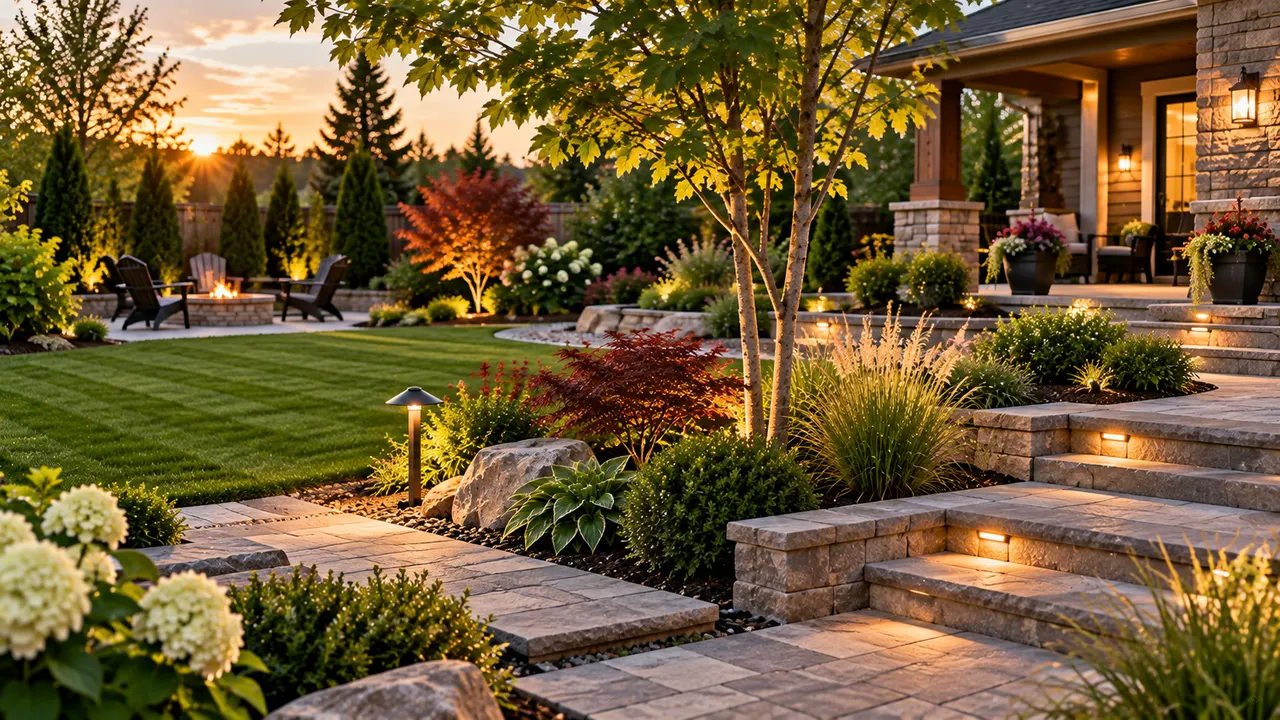
Quick answer
Basic landscaping such as sod, mulch and simple planting often runs roughly $4-$12 per square foot, while high-end hardscaping can reach $50-$100+ per square foot. A full backyard renovation is commonly around $3,000-$10,000 for a small refresh, $15,000-$40,000 for a mid-size upgrade and $50,000+ for large projects. Local quotes vary widely.
How much does landscaping cost? Basic landscaping such as sod, mulch and simple planting often lands around $4-$12 per square foot, while patios, walls and other hardscaping cost considerably more. A full backyard renovation can run from a few thousand dollars for a small refresh to $50,000 or more for a large project.
The range is wide because "landscaping" can mean a $200 mulch refresh or an $80,000 backyard remodel with a patio, outdoor kitchen and irrigation system. The materials, the size of the yard and where you live all move the number significantly.
This guide breaks landscaping costs down by project type using typical, approximate ranges, so you can walk into a contractor conversation already knowing roughly what to expect. Treat every figure as a ballpark: prices vary by region, season and year, and only local itemized quotes tell you what your project will actually cost.
Key Takeaways
- Basic landscaping often runs roughly $4-$12 per square foot, and high-end hardscaping $50-$100+ per square foot.
- A full backyard renovation commonly costs around $3,000-$10,000 for a small yard, $15,000-$40,000 for a mid-size upgrade, and $50,000+ for a large or luxury project.
- Hardscaping (patios, walls, decks) almost always costs more per square foot than softscaping (plants, sod, mulch).
- Site conditions like slope, poor drainage, tree removal and difficult access can add 10-30% to a quote before any design work happens.
- Getting at least three itemized quotes is the best way to spot an overpriced bid or a scope that's missing something.
- A mix of DIY softscaping and hired hardscaping is usually the most budget-friendly way to renovate a backyard.
What Determines How Much Landscaping Costs?
Project size, materials, local labor rates and site prep drive most of the price. That's why two seemingly similar backyards can get quotes that are thousands of dollars apart.
Size is measured in square feet or linear feet, and material choice can easily double or halve the cost of the same layout.
Site prep is the one homeowners most often forget to budget for. Grading a sloped yard, removing an old tree stump, hauling away construction debris or dealing with poor drainage can each add hundreds to several thousand dollars before a single paver or plant goes in.
Labor typically makes up roughly 40-60% of a landscaping bill, which is why the same patio design can cost noticeably more in a high cost-of-living metro area than in a smaller town.
Ask every contractor for a written, itemized quote that separates materials from labor. It's the fastest way to compare bids apples-to-apples and to spot which company is padding one line item.
Landscape Design and Planning Costs
Larger projects usually start with a design phase, and it's worth budgeting for even if you plan to DIY the installation.
A licensed landscape architect typically charges around $70-$150 per hour, or a flat fee of roughly $1,500-$6,000 for a full backyard design plan on an average lot. A landscape designer without an architecture license is usually less expensive, often $50-$100 per hour or $300-$1,500 for a simpler planting or layout plan.
Permits are a smaller but easy-to-miss cost. Many cities require a permit for retaining walls over about 3-4 feet tall, for decks attached to the house, or for major grading and drainage changes. Permit fees generally run about $50-$500 depending on the project and your municipality.
If your project is small, like a few new garden beds or a mulch refresh, you can usually skip the formal design phase and go straight to installation.
Hardscaping Costs: Patios, Walkways and Retaining Walls
Hardscaping, meaning the hard, non-living elements of a yard, is usually where the biggest chunk of a landscaping budget goes.
A poured concrete patio typically costs around $8-$18 per square foot installed. Concrete or clay pavers run higher, around $15-$30 per square foot, while natural stone like flagstone can reach $20-$35 per square foot depending on the stone and how intricate the pattern is. A simple gravel or decomposed granite path is the budget option at roughly $5-$10 per square foot.
Retaining walls are priced by face foot (the visible height times length). Timber walls run about $15-$25 per face foot, segmental concrete block walls about $25-$40, and natural stone walls $40-$60 or more. Any wall taller than about 4 feet often needs an engineer's stamp, which adds design cost but is not optional if you want it built safely and to code.
Softscaping Costs: Plants, Sod, Mulch and Trees
Softscaping covers everything living in your yard, and it's generally the most affordable category to upgrade.
New sod costs roughly $0.90-$2.00 per square foot installed, while seeding a lawn from scratch is cheaper at about $0.10-$0.20 per square foot, though it takes months longer to fill in. If your lawn is thin rather than dead, overseeding the existing lawn is often the cheapest fix of all. Mulch typically runs about $65-$150 per cubic yard installed, and one cubic yard covers roughly 100-110 square feet at a 3-inch depth.
Installed shrubs generally run about $50-$200 each depending on size and variety. Trees vary widely: a small ornamental tree in a 5-gallon container might run $150-$500 installed, while an established shade tree with a larger root ball can run $500-$2,000 or more once you factor in the equipment needed to move and plant it.
Softscaping is also the category where DIY makes the most financial sense, since planting, mulching and seeding require far less specialized equipment than hardscaping.
Irrigation, Drainage and Water Feature Costs
Water management is easy to overlook until a yard is either dying of thirst or staying soggy for days after every rain.
A full in-ground sprinkler system for an average-size yard typically costs around $3,000-$6,000 installed, or roughly $0.50-$1.00 per square foot of lawn covered. Drip irrigation for garden beds is much cheaper to add, usually about $400-$1,600 depending on how many zones you need.
Drainage fixes vary by severity. A French drain to redirect standing water generally costs about $10-$25 per linear foot installed, which is often far cheaper in the long run than repeatedly replanting a soggy area.
Water features are the most optional line item here. A small pondless waterfall or basic fountain typically runs about $1,500-$5,000, while a larger koi pond or a water feature built into a patio design can climb past $10,000.
Fencing, Decks and Outdoor Structure Costs
Structures that define or cover part of the yard fall between hardscaping and full construction in both complexity and price.
A wood privacy fence generally costs around $15-$30 per linear foot installed, while vinyl runs a bit higher at $20-$40 per linear foot but needs less long-term maintenance. Chain link is the budget option at roughly $10-$20 per linear foot.
Decks are priced by square footage of the deck surface. Pressure-treated wood decking typically runs about $25-$40 per square foot installed, while composite decking, which resists rot and doesn't need staining, runs higher at roughly $35-$60 per square foot.
A basic pergola or shade structure installed by a contractor usually costs around $2,000-$8,000 depending on size and materials. If you're weighing shade options, compare a covered patio vs. a pergola before you collect quotes.
How Much Does a Full Backyard Renovation Cost?
A full backyard renovation commonly runs about $3,000-$10,000 for a small refresh, $15,000-$40,000 for a mid-size upgrade and $50,000 or more for a large or luxury project. Once you start combining hardscaping, softscaping, irrigation and maybe a fence, the total climbs quickly.
A small refresh usually means new mulch, a handful of shrubs, a small paver walkway and some sod repair on an average-size lot. A mid-size renovation adds a real patio, a planting bed overhaul, basic irrigation and maybe a small retaining wall.
A large or luxury renovation, with an outdoor kitchen, extensive hardscaping, mature tree planting, lighting and a full irrigation system, commonly starts around $50,000 and can climb past $150,000 for larger lots or premium materials.
Here are the approximate ranges from this guide in one place. Use them for early budgeting only.
| Project | Approximate installed cost |
|---|---|
| Basic landscaping (sod, mulch, simple planting) | $4-$12 per sq ft |
| Poured concrete patio | $8-$18 per sq ft |
| Paver patio | $15-$30 per sq ft |
| Flagstone patio | $20-$35 per sq ft |
| Gravel or decomposed granite path | $5-$10 per sq ft |
| Sod | $0.90-$2.00 per sq ft |
| In-ground sprinkler system (average yard) | $3,000-$6,000 |
| French drain | $10-$25 per linear ft |
| Wood privacy fence | $15-$30 per linear ft |
| Pressure-treated wood deck | $25-$40 per sq ft |
| Small backyard refresh | $3,000-$10,000 |
| Mid-size backyard renovation | $15,000-$40,000 |
| Large or luxury renovation | $50,000+ |
Factors That Push Landscaping Costs Higher or Lower
The same project can come in at very different prices depending on a handful of variables that have nothing to do with the design itself.
Slope and grading matter a lot. A yard that needs to be leveled or regraded before hardscaping can start often adds roughly $1,000-$5,000 depending on how much dirt has to move. Tree and stump removal is similar, typically around $200-$800 per tree depending on size and root system.
Access to the backyard affects labor cost more than people expect. If crews can't get equipment through a gate or side yard and have to hand-carry materials, that alone can add 10-20% to labor costs on a hardscaping job.
Timing plays a role too. Spring and early fall are the busiest seasons for landscapers in most of the country, while late summer or winter bookings can sometimes come with better pricing simply because crews have more open slots.
Is It Cheaper to DIY Landscaping or Hire a Pro?
DIY is cheaper for planting, mulching and seeding, but hiring a pro usually makes more sense for structural, drainage and electrical work.
Planting shrubs and perennials, spreading mulch, seeding a lawn and building a simple raised garden bed are reasonable DIY projects for most homeowners, and skipping the labor can save roughly 50-70% compared to hiring it out.
Retaining walls over about 4 feet, drainage systems, patios that require real grading, and anything involving electrical work for lighting or irrigation timers are worth hiring a professional for. Getting these wrong isn't just expensive to fix; it can create water damage or safety issues near your foundation.
A common middle ground: hire a pro for the hardscaping and irrigation, then handle the planting, mulching and finishing touches yourself. Before you start, review these landscaping mistakes to avoid before a yard redo so the budget isn't eaten by rework.
Budget by Project, Not by Guesswork
The real answer to how much landscaping costs is several smaller answers stacked together: what you're building, what materials you choose, how much site work is involved, and where you live.
Instead of estimating one number for your whole backyard, price out each piece separately, such as patio, planting, irrigation and fencing, using the approximate ranges above, then add a 10-15% buffer for site conditions you can't fully know until work starts. Confirm everything with local itemized quotes before you commit.
Frequently Asked Questions
How much does landscaping cost per square foot?
Basic landscaping, like sod, mulch and simple planting, often runs roughly $4-$12 per square foot. Hardscaping such as patios and retaining walls costs significantly more, typically around $15-$60 or more per square foot depending on materials.
Is landscaping cost negotiable with contractors?
Sometimes, especially on material choices, timing and project scope. Contractors are more likely to adjust price by swapping materials or trimming scope than by simply discounting labor, so ask what's flexible before assuming the first quote is final.
Do I need a permit for landscaping projects?
Simple planting, mulching and small garden beds usually don't need a permit. Retaining walls over roughly 3-4 feet, attached decks, and major grading or drainage changes often do, so check with your local building department before starting.
What is the cheapest way to landscape a backyard?
Focus on softscaping you can DIY: mulch, mid-size plants instead of mature ones, and seed instead of sod. Save hardscaping for a later phase. Doing the planting and mulching yourself can cut a project's cost substantially.
How much should I budget for landscaping compared to my home's value?
A commonly cited guideline is roughly 10-15% of your home's value for a full landscaping overhaul, though a smaller refresh can cost a fraction of that. Treat it as a starting point for planning, not a hard rule.
Published · Last updated . Written by the Backyard with Ben team from standard, widely published guidance. About us.
More for your backyard
Gear up with our top-rated tool picks, shop the look if you'd rather buy than build, or read a related guide. See all Landscaping guides.
Related guides
 AI-generatedLandscaping
8 Landscaping Mistakes to Avoid Before You Redo Your Yard
Most landscaping regrets come from skipped planning, not bad execution. Write a plan, call 811 before digging, sort out drainage first and space plants for their mature size.
 AI-generatedOutdoor Living
10 Backyard Staycation Ideas That Feel Like a Vacation
The best backyard staycation ideas give you a place to settle in: a comfortable lounge zone, shade, water, a fire feature, warm layered lighting and a few sensory touches. Start with two or three that fit your space and budget.
 AI-generatedLandscaping
9 Front Yard Landscaping Ideas to Boost Curb Appeal
Sharpen your bed edges, layer plants by height, frame the entry and light the path. Most of these front yard landscaping ideas are weekend projects, not months-long overhauls.