
How to Overseed a Lawn for Thicker, Greener Grass
To overseed a lawn, mow short, rake out thatch, spread seed at the bag's overseeding rate, rake it in and keep the soil moist until it sprouts. Cool-season lawns do best from mid-August to early October.
 By the Backyard with Ben teamUpdated · 9 min read
Quick answer
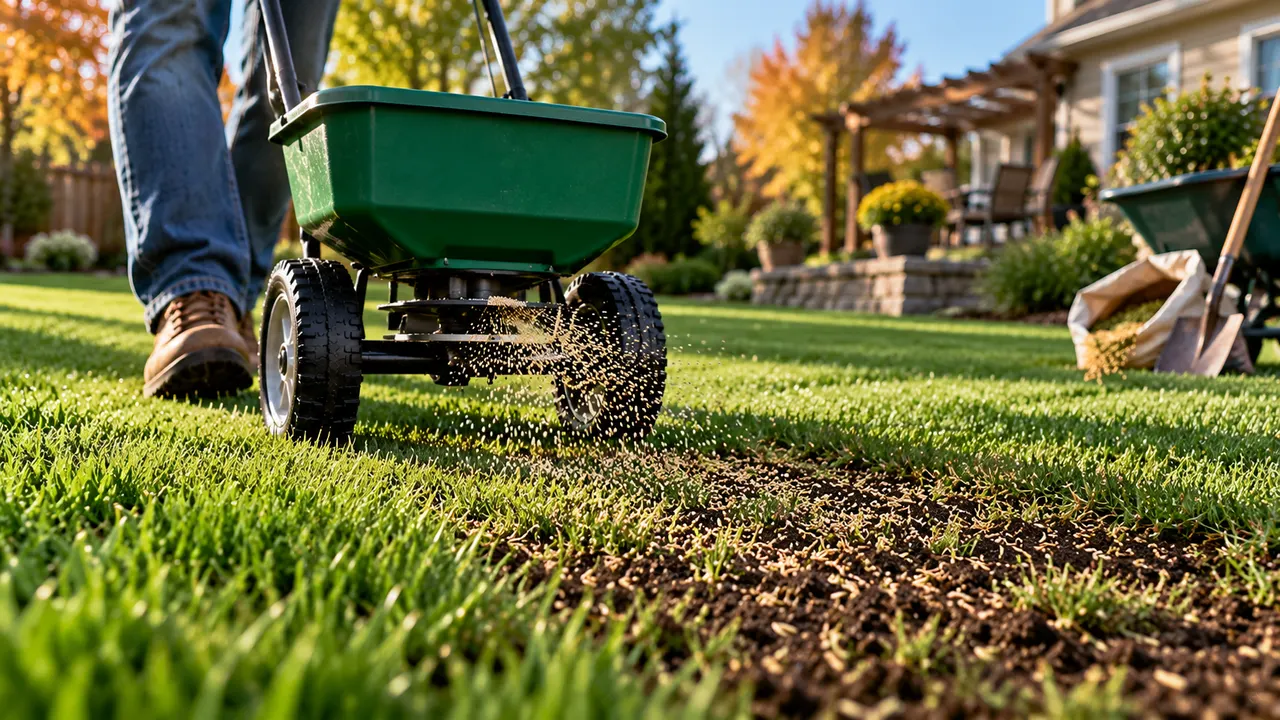
Overseed cool-season lawns from mid-August to early October and warm-season lawns in late spring to early summer. Mow to about 1.5-2 inches, rake out thatch, aerate if the soil is compacted, spread seed at the bag's overseeding rate in two directions, rake it in lightly, then keep the top half-inch of soil moist until it sprouts.
Overseeding means spreading new grass seed directly into your existing lawn to fill bare patches and thicken thin turf, without tearing anything up. To do it right, seed at the right time for your grass type, prep the lawn so seed actually touches soil, and keep it consistently moist for the first couple of weeks.
If your yard looks thinner every year, overseeding is usually the fastest way to turn that around, and a thicker lawn also crowds out weeds on its own.
Here's how to overseed a lawn step by step, from timing and prep to seeding rates and the watering routine that actually gets seed to germinate.
Key Takeaways
- Cool-season lawns overseed best from mid-August through early October; warm-season lawns do best in late spring to early summer.
- Mow short (about 1.5-2 inches) and rake out thatch before you spread any seed.
- Follow the overseeding rate on the bag. Tall fescue and ryegrass blends often call for about 4-6 lbs per 1,000 sq ft, while bluegrass needs far less. More isn't better.
- Keep the top half-inch of soil consistently moist with light daily watering for the first 1-2 weeks.
- Hold off on regular mowing until the new grass reaches about 3 inches tall.
- Avoid most pre-emergent herbicides for the window on the label (often 8-12 weeks) before and after seeding, or the new seed won't germinate.
How Do You Know Your Lawn Needs Overseeding?
Your lawn needs overseeding if it looks thin or patchy even with normal watering and feeding, if you can see soil when you look straight down at it, or if weeds keep showing up in the same spots every year. Weeds are opportunists: they move into bare soil that grass isn't covering.
Grass thins out for ordinary reasons: heavy foot traffic, hot summers, disease, grubs or simply age. Individual grass plants don't live forever, and once more of them die off than fill in each year, the lawn gets progressively thinner.
As a rough check, walk the yard and look straight down. If bare soil shows through across a large share of the lawn, overseeding will likely make a bigger visible difference than another round of fertilizer alone. If you're not sure thinning is the real problem, start by diagnosing why your lawn looks tired so you can rule out compaction, thatch or pests first.
Take a photo of your lawn from the same spot every spring and fall. Gradual thinning is much easier to spot in side-by-side photos than standing in the yard day to day.
When Is the Best Time to Overseed a Lawn?
The best time to overseed depends on your grass type: early fall for cool-season lawns and late spring to early summer for warm-season lawns.
Cool-season grasses (tall fescue, Kentucky bluegrass and perennial ryegrass, common across the northern half of the country) overseed best from mid-August through early October. The soil is still warm enough for quick germination, while cooler air and shorter days mean less weed competition and less heat stress.
Warm-season grasses such as Bermuda and zoysia, common in the South, should be overseeded in late spring to early summer, once the lawn has fully greened up and soil temperatures stay above 65°F. St. Augustine is usually patched with sod or plugs rather than seed.
| Grass type | Best overseeding window | Typical germination time |
|---|---|---|
| Tall fescue, perennial ryegrass (cool-season) | Mid-August to early October | About 5-14 days (ryegrass is fastest) |
| Kentucky bluegrass (cool-season) | Mid-August to mid-September | About 2-4 weeks |
| Bermuda, zoysia (warm-season) | Late spring to early summer, soil above 65°F | About 1-3 weeks (zoysia is slower) |
Overseeding in the wrong season is one of the most common reasons people feel it didn't work. Seed spread in peak July heat or right before a hard freeze simply won't germinate reliably, no matter how well the lawn was prepped.
Prepping Your Lawn Before You Spread Seed
Seed that lands on thick thatch or compacted soil mostly just feeds the birds. Preparation is what actually determines whether overseeding works.
Start by mowing shorter than usual, around 1.5 to 2 inches, and bag the clippings so new seed reaches soil instead of sitting on a mat of grass. Next, rake out heavy thatch (the layer of dead grass and roots between the soil and the green blades). If it's thicker than about half an inch, it's blocking seed-to-soil contact.
Core aeration is worth doing at the same time if your soil feels hard or water puddles instead of soaking in. Pulling small plugs of soil opens channels for new roots and gives seed somewhere to settle besides bare, packed dirt.
Choosing the Right Grass Seed
Match new seed to what's already growing unless you're intentionally switching grass types. Mixing tall fescue into a Kentucky bluegrass lawn, for example, can create uneven texture and color because the two grow at different rates and blade widths.
Look for seed labeled for your region, and if your yard mixes sun and shade, consider a sun/shade blend rather than a single variety. Check the label for germination rate and weed seed content: a bag with 0% weed seed and a germination rate above 85% is a better buy than a bag padded with filler.
Be realistic about heavy shade under trees. Most lawn grasses struggle with less than about 4 hours of direct sun a day, and mulch or a shade-tolerant groundcover may serve that spot better than reseeding it every year.
How Much Grass Seed Do You Need to Overseed?
Use the overseeding rate printed on the seed bag, which is lower than the new-lawn rate on the same bag. Tall fescue and perennial ryegrass blends commonly run about 4-6 lbs per 1,000 sq ft, Kentucky bluegrass is much lighter (often 1-2 lbs) because its seed is tiny, and Bermuda is usually in the 1-3 lb range.
A broadcast or drop spreader gives far more even coverage than tossing seed by hand. Split the seed into two equal batches and walk the lawn twice, once in north-south passes and once in east-west passes, to avoid a streaky, striped result.
After spreading, lightly rake the seed into the soil surface or top-dress with about a quarter inch of compost or topsoil. Seed left exposed on the surface dries out fast and is easy for birds to pick off.
How Often Should You Water After Overseeding?
Water lightly once or twice a day for the first 7-14 days, just enough to keep the top half-inch of soil moist but not soaked. This is where many overseeding attempts quietly fail.
Short, frequent watering (5-10 minutes per zone) works better here than one long soak, since heavy watering can wash uncovered seed out of place.
Once green sprouts appear, gradually stretch watering to once a day, then every other day over the next two to three weeks. This trains new roots to grow deeper instead of staying near the surface.
Don't let the lawn dry out completely during establishment. Even a day or two of drought stress can kill seedlings that haven't developed roots yet.
Mowing and Fertilizing After Overseeding
Hold off on mowing until the new grass reaches about 3 inches tall, then cut it back to roughly 2.5-3 inches. Never take off more than a third of the blade in one pass, especially on young grass.
Keep the mower blade sharp for these first cuts. A dull blade tears young seedlings out of loose soil instead of cutting them cleanly.
A starter fertilizer applied at seeding or shortly after germination helps new roots establish faster. After that, fold the new grass into a normal seasonal lawn fertilizing schedule. Skip weed-and-feed products and most pre-emergent herbicides around seeding time; they're designed to stop seeds from germinating, including the ones you just spread. If you rely on crabgrass pre-emergent for weed control, plan your overseeding around its label window.
Common Overseeding Mistakes to Avoid
The biggest mistake is timing: seeding in midsummer heat or right before a hard frost sets the project up to fail before the seed hits the ground.
The second is skipping prep. Spreading seed over thick thatch, compacted soil or long clippings sharply lowers how much of it germinates, no matter how good the seed is.
The third is inconsistent watering. Letting the lawn dry out for even a couple of days in the first two weeks can undo germination progress. The fourth is applying a pre-emergent herbicide too close to seeding, which stops your new grass from sprouting right along with the weeds.
A Thicker Lawn Is a Season of Patience Away
Overseeding isn't complicated, but it rewards doing things in the right order: prep the soil, seed at the right time and rate, then stay consistent with water until the new grass is established.
Give it one full season before judging the results. A lawn that goes from patchy to genuinely thick usually takes a full fall-to-spring cycle to show its final look, especially for cool-season lawns overseeded in early fall.
Frequently Asked Questions
How often should I overseed my lawn?
Most lawns benefit from overseeding once a year, typically in early fall for cool-season grasses. A very thin or damaged lawn may need two years in a row before it fills in fully.
Can I overseed without aerating first?
Yes, especially on a lawn that isn't compacted. Raking out thatch and mowing short is often enough. On hard or heavily trafficked lawns, aerating first noticeably improves seed-to-soil contact and is worth the extra step.
How long does it take grass seed to grow after overseeding?
Ryegrass and tall fescue usually sprout in about 5-14 days, Kentucky bluegrass takes closer to 2-4 weeks, and warm-season grasses like Bermuda typically take 1-3 weeks depending on soil temperature. Full thickening and blending with the existing lawn usually takes 6-8 weeks.
Should I overseed before or after fertilizing?
Apply a starter fertilizer at the same time you spread seed, or within a few days after. Avoid weed-and-feed and most pre-emergent products for the window stated on their labels, since they interfere with germination.
Do I need to cover grass seed with straw after overseeding?
It isn't required, but a light layer of clean straw or a seeding mulch helps hold moisture and protect seed on slopes or in windy, sunny areas. On a flat lawn, consistent watering alone is usually enough.
Published · Last updated . Written by the Backyard with Ben team from standard, widely published guidance. About us.
More for your backyard
Gear up with our top-rated tool picks, shop the look if you'd rather buy than build, or read a related guide. See all Lawn Care guides.
Related guides
 AI-generatedLawn Care
When Is the Best Time to Fertilize Your Lawn? A Seasonal Guide
Fertilize cool-season grass mainly in early fall with a lighter feeding in spring, and feed warm-season grass from late spring through summer while it's actively growing. Soil temperature, not the calendar, is the real signal.
 AI-generatedLawn Care
How to Get Rid of Weeds in Your Lawn Without Killing the Grass
Identify whether you're dealing with broadleaf weeds, grassy weeds or sedges, then treat each at the right time with a selective product or by hand. A thick, well-mowed lawn is the best long-term weed control.
 AI-generatedLawn Care
Why Your Lawn Looks Tired: 7 Causes and How to Fix Each
Dull, thin or yellowing grass almost always has a specific cause: heat stress, low nitrogen, thatch, compaction, shade, mowing height or pests. Diagnose the symptom first, then fix the cause instead of guessing.