
When Is the Best Time to Fertilize Your Lawn? A Seasonal Guide
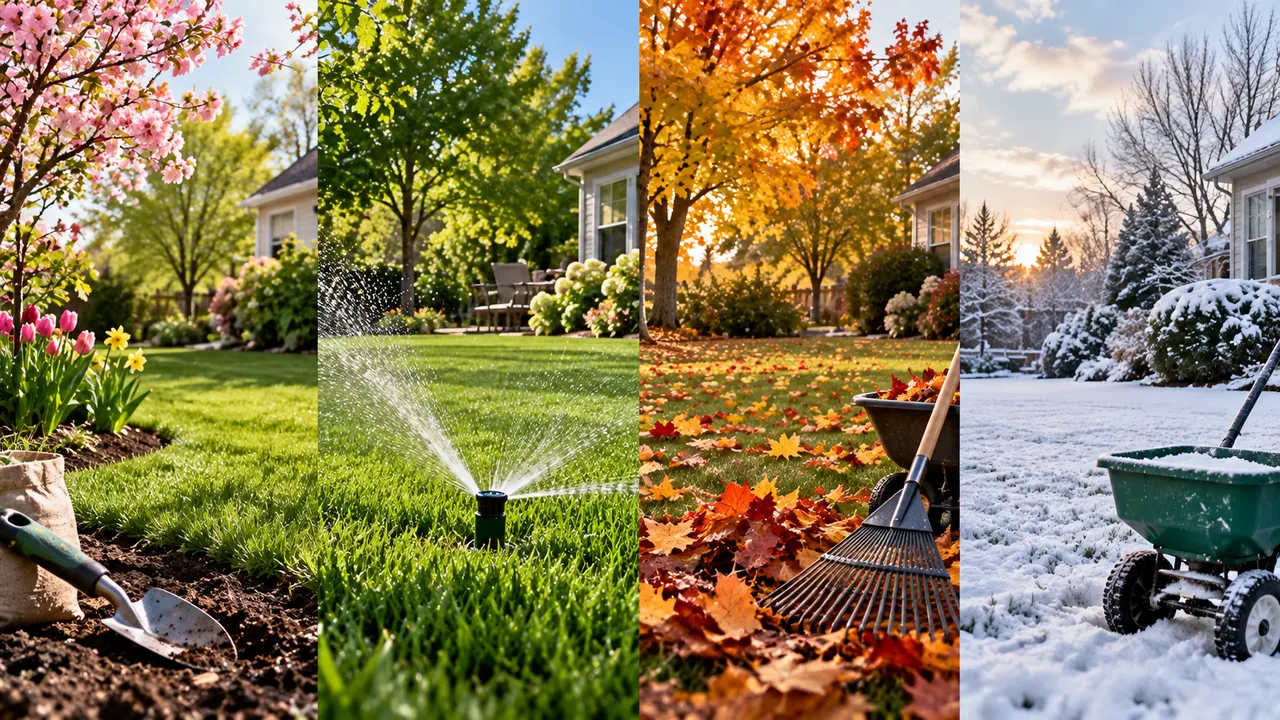
Fertilize cool-season grass mainly in early fall with a lighter feeding in spring, and feed warm-season grass from late spring through summer while it's actively growing. Soil temperature, not the calendar, is the real signal.
 By the Backyard with Ben teamUpdated · 9 min read
Quick answer
For cool-season grass (fescue, bluegrass, ryegrass), the most important feeding is in early fall, about 6-8 weeks before your first hard frost, with an optional light feeding in mid-to-late spring. For warm-season grass (Bermuda, zoysia, St. Augustine), fertilize from late spring, once it fully greens up, through late summer.
The best time to fertilize your lawn depends on your grass type: cool-season lawns get their most important feeding in early fall, while warm-season lawns are fed from late spring through summer. In both cases, the real trigger is soil temperature and active growth, not a date on the calendar.
Ask five neighbors when they fertilize and you'll probably hear five answers, from Memorial Day to whenever the grass looks pale. Fertilize at the wrong time and you can burn the lawn, feed the weeds more than the grass, or waste half the bag on a lawn that isn't growing anyway.
This guide breaks down when to fertilize cool-season and warm-season lawns through each part of the year, so you can stop guessing and feed your lawn when it can actually use it.
Key Takeaways
- Cool-season grasses (fescue, bluegrass, ryegrass) do most of their root growing, and need most of their fertilizer, in fall, not spring.
- Warm-season grasses (Bermuda, zoysia, St. Augustine) should be fed from late spring through summer, while they're actively growing.
- Soil temperature matters more than the date: cool-season grass wakes up around 55°F, warm-season grass around 65°F.
- Never fertilize a dormant or drought-stressed lawn. The grass can't use the nutrients, and the fertilizer either sits there or burns it.
- For most lawns, three to four lighter feedings a year beat one heavy application.
- The single most important feeding for a cool-season lawn is in fall, roughly 6-8 weeks before your first hard frost.
Why Timing Matters More Than the Fertilizer You Buy
Grass only takes up nutrients when it's actively growing roots and leaves. Fertilize a lawn that's dormant or barely ticking over in summer heat, and most of that nitrogen washes away, feeds weeds, or sits in the soil until conditions improve.
That's why the best time to fertilize lawn grass isn't a fixed month. It's whenever your grass type is in an active growth phase. A basic fertilizer applied at the right moment will outperform a premium bag applied at the wrong one.
Use an inexpensive soil thermometer pushed 2-3 inches into the lawn instead of guessing from air temperature. Soil warms and cools more slowly than air, so a warm early-spring afternoon can still sit over soil in the low 50s, and that soil number is what your grass responds to.
Do You Have Cool-Season or Warm-Season Grass?
If your lawn is greenest in spring and fall and a bit tired in July, it's almost certainly cool-season grass; if it turns brown all winter and doesn't green up until late spring, it's warm-season grass.
Cool-season grasses (tall fescue, Kentucky bluegrass, perennial ryegrass) are common across the northern two-thirds of the US. They grow most vigorously in spring and fall, slow down in summer heat, and go dormant but stay alive over winter.
Warm-season grasses (Bermuda, zoysia, St. Augustine, centipede and bahiagrass) dominate the South. They green up in late spring, grow hardest through summer heat, and go fully dormant and brown once temperatures drop in fall.
This one distinction flips the whole fertilizing calendar:
| Season | Cool-season lawns | Warm-season lawns |
|---|---|---|
| Early spring | Wait; grass is just waking up | Wait; lawn is dormant or still greening up |
| Mid-to-late spring | Optional light, slow-release feeding once actively growing | First feeding after full green-up, soil above 65°F |
| Summer | Usually skip; focus on watering and mowing height | Feed every 6-8 weeks while actively growing |
| Early fall | Main feeding, about 6-8 weeks before first hard frost | Taper off; avoid heavy nitrogen as dormancy nears |
| Late fall | Optional second feeding or winterizer before the ground freezes | None; lawn is dormant |
Should You Fertilize Your Lawn in Spring?
Lightly, and only once the grass is actively growing. Spring is the most over-fertilized season in lawn care.
For cool-season grass, a heavy spring feeding pushes a burst of leaf growth right before summer stress arrives, which means more mowing now and a weaker root system when the heat hits. If you feed a cool-season lawn in spring at all, wait until it has greened up and started growing on its own, usually mid-to-late April in much of the country, and use a light, slow-release nitrogen. Some lawns do fine skipping spring entirely and saving the real feeding for fall.
Warm-season lawns are the opposite. Spring is when they get their first real feeding, but not too early. Wait until the lawn has fully greened up and you've mowed it two or three times, once soil holds above 65°F. Feeding warm-season grass while it's still partly dormant mostly feeds winter weeds like clover and chickweed.
Summer: Proceed With Caution
For cool-season lawns, summer is generally a time to hold off on fertilizer. High nitrogen plus heat and drought stress is a common recipe for burned or diseased grass. If your fescue or bluegrass looks stressed in July, the fix is usually water and mowing height, not fertilizer.
Warm-season lawns are the exception, because this is their peak growing season. Bermuda and zoysia in particular benefit from a feeding every 6-8 weeks through summer while they're actively growing and being mowed often.
Whatever your grass type, never fertilize during an active drought or right before a heat wave with no rain or irrigation planned. Nitrogen without enough water causes the scorched, straw-like patches people often blame on the fertilizer itself.
Fall: The Most Important Feeding for Cool-Season Lawns
If you only fertilize a cool-season lawn once a year, do it in fall. As temperatures drop, cool-season grass shifts energy into root growth and stores carbohydrates for winter, and nitrogen applied now supports those roots instead of just pushing leaf growth.
Aim for roughly 6-8 weeks before your area's average first hard frost, which for much of the country lands between early September and mid-October. A second, lighter application 4-6 weeks later can further strengthen roots heading into winter. Fall is also prime time to overseed a thin lawn; use a starter fertilizer on newly seeded areas rather than your regular blend.
For warm-season lawns, fall is the signal to taper off. A late nitrogen push on Bermuda or St. Augustine right before dormancy can leave the grass more vulnerable to winter injury and disease.
Do You Need a Winterizer Fertilizer?
Not always. A winterizer is optional for cool-season lawns and generally unnecessary for warm-season lawns.
Winterizer products, typically higher in potassium relative to nitrogen, can be a final cool-season application in late fall, after top growth has mostly stopped but before the ground freezes. The goal isn't greening the lawn for winter; it's giving the plant reserves to recover quickly next spring. Skip it if you've already made two solid fall applications.
Once warm-season grass has gone dormant and brown, there's no active growth for fertilizer to support, so a late application is mostly wasted.
How to Read Your Lawn Instead of a Fixed Date
Regional calendars are a decent starting point, but your yard can run a few weeks ahead or behind depending on sun exposure, elevation and microclimate. A south-facing slope can warm up well before a shaded north-facing yard nearby.
Instead of circling a date, watch for three signals: new leaf growth resuming after dormancy, soil temperature crossing 55°F for cool-season grass or 65°F for warm-season grass, and at least one or two mows already done that season.
If any of those signs are missing, the lawn probably isn't ready to use fertilizer efficiently yet, whatever the bag's schedule says.
Common Timing Mistakes Worth Avoiding
The most common mistake is treating spring as the big feeding and fall as an afterthought for cool-season lawns; it's really the reverse. Another is fertilizing a newly seeded lawn with regular fertilizer before it's established. Starter fertilizers are formulated differently for exactly this reason.
Fertilizing right before a heavy rainstorm is another misstep. Heavy rain within a day or two can wash granular fertilizer off the lawn and into storm drains before it soaks in.
Finally, avoid stacking fertilizer, pre-emergent, fungicide and pesticide treatments on the same day. If the lawn reacts poorly, you won't know what caused it, and some combinations aren't recommended on product labels. Spring weed-and-feed products also need careful timing; see how to get rid of weeds in your lawn for when pre-emergent actually works. For the broader habits that wear a lawn down, read our rundown of common lawn care mistakes.
Feed the Lawn When It's Ready, Not When the Calendar Says To
The best time to fertilize lawn grass comes down to two things: knowing whether you have a cool-season or warm-season lawn, and watching what that grass is actually doing. Cool-season lawns want their heaviest feeding in fall with a light touch in spring; warm-season lawns want summer feedings during their prime growing window.
Match fertilizer timing to your grass's real growth cycle and you'll likely use less product and see steadier, healthier results than a lawn fed on a generic schedule.
Frequently Asked Questions
What month should I fertilize my lawn?
It depends on your grass type more than the month. Cool-season lawns generally do best fertilized in September or October, with an optional lighter application in April or May. Warm-season lawns do best fertilized from late April or May through August, while they're actively growing.
How many times a year should I fertilize my lawn?
Most lawns do well with three to four lighter applications a year rather than one or two heavy ones. For cool-season grass, that typically means a light spring feeding plus one or two fall applications; for warm-season grass, it means spreading feedings from late spring through summer.
Should I fertilize before or after mowing?
Fertilize a day or two after mowing rather than right before. Granules settle down to the soil instead of getting caught on long blades and picked up with the next round of clippings.
Should I water after fertilizing my lawn?
For most granular fertilizers, yes: a light watering helps move the granules into the soil. The exception is weed-and-feed products, which usually need to stay on damp leaves, so follow the watering instructions on the label.
Published · Last updated . Written by the Backyard with Ben team from standard, widely published guidance. About us.
More for your backyard
Gear up with our top-rated tool picks, shop the look if you'd rather buy than build, or read a related guide. See all Lawn Care guides.
Related guides
 AI-generatedLawn Care
How to Overseed a Lawn for Thicker, Greener Grass
To overseed a lawn, mow short, rake out thatch, spread seed at the bag's overseeding rate, rake it in and keep the soil moist until it sprouts. Cool-season lawns do best from mid-August to early October.
 AI-generatedLawn Care
7 Lawn Care Mistakes That Are Ruining Your Grass
Most thin, patchy lawns are the result of everyday habits: mowing too short, watering a little every day, dull blades, bagging every clipping and fertilizing blind. Here are seven to stop and what to do instead.
 AI-generatedLawn Care
Why Your Lawn Looks Tired: 7 Causes and How to Fix Each
Dull, thin or yellowing grass almost always has a specific cause: heat stress, low nitrogen, thatch, compaction, shade, mowing height or pests. Diagnose the symptom first, then fix the cause instead of guessing.