
How to Grill the Perfect Steak: Temperature and Timing
Sear over high heat, finish thicker steaks on a cooler zone, and pull the steak about 5°F below your target, since it keeps rising as it rests. Medium-rare finishes at 130-135°F.
 By the Backyard with Ben teamUpdated · 9 min read
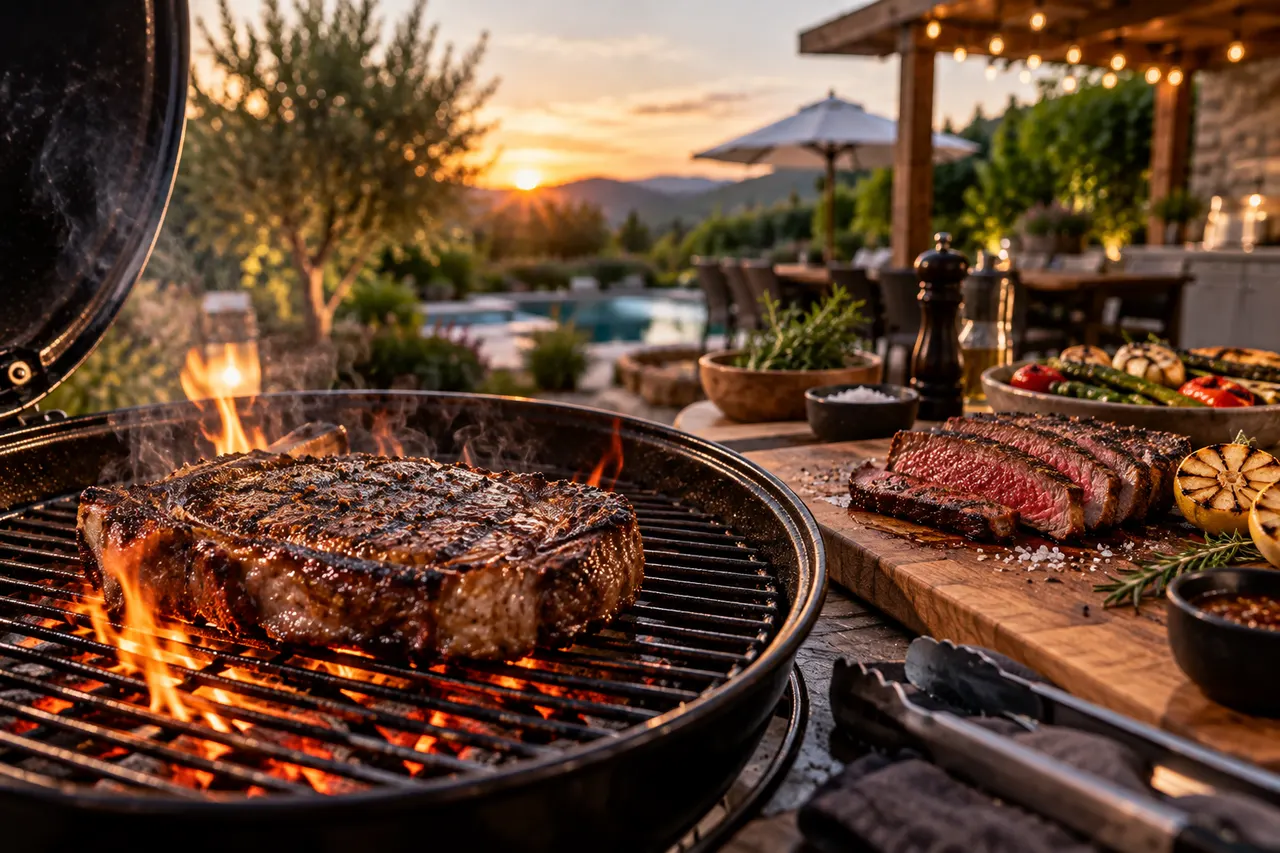
Quick answer
To grill the perfect steak, dry and salt a steak at least 1 inch thick, sear it over a 450-500°F direct zone, then finish thicker cuts on the cooler side. Pull it about 5°F below your target (125-130°F for medium-rare) and rest it 5-10 minutes. USDA's safe minimum is 145°F plus a 3-minute rest.
To grill the perfect steak, you need three things: a steak at least 1 inch thick, a two-zone fire with a hot side for searing, and a thermometer so you pull the meat a few degrees before your target doneness. Get those right and the marinade, the cut and the grill brand matter far less. Most steaks aren't ruined at the butcher counter; they're ruined in the last few minutes on the grill, when perfect medium-rare turns gray and tough in under a minute.
This guide walks through the whole process, from choosing and seasoning the steak to resting it, with internal temperatures and timing you can actually use.
Key Takeaways
- Take the steak out of the fridge 30-40 minutes before grilling so it cooks more evenly.
- Salt with kosher salt at least 40 minutes ahead, or right before grilling, not in between.
- Build a two-zone fire: one side for a hard sear, one cooler side for finishing thicker cuts.
- Pull steak about 5°F below your target temperature, since it keeps rising while it rests.
- Medium-rare finishes at 130-135°F and medium at 140-145°F, measured in the center of the thickest part. USDA's safe minimum for steaks is 145°F with a 3-minute rest.
- Rest the steak 5-10 minutes before cutting into it.
Start With the Right Steak and Take the Chill Off
Ribeye, New York strip and sirloin are forgiving grilling cuts because they have enough fat and thickness to handle direct heat without drying out. Whatever cut you choose, look for one at least 1 inch thick. Thin steaks overcook almost instantly and leave very little room for error.
A steak straight from the refrigerator cooks unevenly: the outside sears while the center is still cold, leaving a gray band of overcooked meat around a cool middle. Set it out for 30-40 minutes before grilling to take the deep chill off. Keep it well under the 2-hour limit for perishable food sitting at room temperature.
Pat the steak completely dry with paper towels right before it goes on the grill. A wet surface steams instead of searing, which is one of the most common reasons a steak comes off pale instead of browned.
Set the steak on a wire rack over a baking sheet while it sits out instead of laying it flat on a plate. Air reaches both sides, so the surface stays drier and the steak warms more evenly.
Season Early or Season Right Before, Not in Between
Salt draws moisture out of meat on contact. For roughly the first half hour, that moisture sits on the surface, which is exactly what you don't want when the steak hits the grates.
Salting generously with kosher salt at least 40 minutes before grilling gives that moisture time to be reabsorbed, seasoning the meat below the surface. If you don't have 40 minutes, salt immediately before grilling instead. Either approach works; it's the awkward middle window that causes problems.
Add coarsely ground black pepper right before grilling, since pepper can scorch and turn bitter over high heat. Skip heavy marinades for a good steak. A light coat of oil, salt and pepper is usually all a well-marbled cut needs.
What temperature should the grill be for steak?
Aim for about 450-500°F at grate level on the hot side for searing, and roughly 325-350°F on a cooler indirect side for finishing thick steaks. That two-zone setup is what lets you cook a thick steak through without burning the outside.
On a charcoal grill, pile the coals on one half and leave the other half empty. On a gas grill, leave one or two burners on high and turn the rest to low or off. Charcoal can run hotter than most gas grills for an extra-hard sear, one of the differences covered in our gas vs charcoal grill guide.
A steak thinner than about 1.25 inches usually doesn't need the cooler side at all and can cook entirely over direct heat.
Clean, hot grates matter as much as the fire. Scrape them and let them heat for a few minutes before the steak goes on so it releases cleanly instead of sticking. If yours are caked with old residue, our guide on how to clean a grill covers a quick fix and a deep clean.
What internal temperature should steak be?
Medium-rare steak finishes at 130-135°F and medium at 140-145°F, measured at the center of the thickest part. Doneness comes down to internal temperature, not color, time or how the steak feels when you press it.
| Doneness | Pull off the grill at | Final temp after resting | Center |
|---|---|---|---|
| Rare | 115-120°F | 120-125°F | Cool, bright red |
| Medium-rare | 125-130°F | 130-135°F | Warm, red-pink |
| Medium | 135-140°F | 140-145°F | Pink |
| Medium-well | 145-150°F | 150-155°F | Slightly pink |
| Well-done | 155°F | 160°F and above | No pink |
Steak keeps cooking from residual heat after it leaves the grill, a process called carryover cooking. A thick steak can climb about 5°F while it rests, so pull it about 5 degrees below your target. These doneness ranges are standard culinary guidance.
Food safety is a separate number. USDA's safe minimum internal temperature for whole-cut beef steaks is 145°F followed by a 3-minute rest, so rare and medium-rare fall below it. If you're cooking for young children, pregnant guests, older adults or anyone with a weakened immune system, cook steaks to at least 145°F. Burgers are different: USDA calls for 160°F for ground beef.
An instant-read thermometer is the only reliable way to hit these numbers. Cutting into the steak to check color lets juices escape and still won't tell you what's happening in the center.
How long do you grill a steak?
A 1-inch steak over direct high heat takes roughly 3-4 minutes per side for medium-rare, or 4-5 minutes per side for medium. Thickness, grill heat and how cold the steak was going in all change that, so treat any timing as a starting point and confirm with a thermometer.
For a steak 1.5 inches or thicker, sear it over direct heat for about 90 seconds per side to build color, then move it to the indirect side and close the lid. Depending on thickness, it usually takes another 6-10 minutes to reach medium-rare. Check the temperature every couple of minutes as it gets close.
Start checking a few minutes earlier than you think you need to. It's much easier to leave a steak on for one more minute than to fix one that's already overcooked.
Flip Once and Use the Thermometer Correctly
Constantly flipping and moving a steak slows browning, because the surface never gets enough uninterrupted contact with the grate to build a real crust. Place it down, leave it alone, flip once, and let the second side sear the same way. With the two-zone method, that's one flip on the hot side before moving to the cooler side.
To check temperature, insert the probe horizontally through the side of the steak so the tip sits in the center of the thickest part, away from bone, fat pockets and the grate. A probe touching the grate gives a falsely high reading.
On an unevenly shaped steak, like a strip with a thick and a thin end, check more than one spot and go by the lowest reliable reading in the thick section rather than an average. For more habits that carry over to everything you grill, see our grilling tips for better backyard BBQ.
How long should steak rest after grilling?
Rest steak for 5-10 minutes before cutting, and at least 3 minutes if you're cooking to USDA's 145°F guideline. Cutting in right away lets the juices run onto the board instead of staying in the meat.
Move the steak to a plate or cutting board and tent it loosely with foil. Loosely is the key word: wrapping it tightly traps steam and softens the crust you just built. Thicker steaks benefit from the longer end of the range, while thin steaks are fine at about 5 minutes.
Once it has rested, slice against the grain. This shortens the muscle fibers in each bite and makes even a chewier cut noticeably more tender.
The Perfect Steak Comes From Temperature, Not Timing Alone
Grilling a great steak isn't about luck or a special recipe. It's about controlling the same few variables every time: a dry, well-seasoned steak, a properly built two-zone fire, and the internal temperature that matches the doneness you want.
Once you've grilled a few steaks by thermometer instead of guesswork, the numbers start to feel automatic. Pull it a few degrees early, rest it properly, and you'll get the steak you wanted every time you fire up the grill.
Frequently Asked Questions
What temperature should steak be pulled off the grill for medium-rare?
Pull it at about 125-130°F for a finished medium-rare of 130-135°F, since carryover cooking usually adds around 5°F while the steak rests. Confirm with an instant-read thermometer in the thickest part.
Is medium-rare steak safe to eat?
USDA's safe minimum for whole-cut steaks is 145°F with a 3-minute rest, which is above medium-rare. Many people choose medium-rare anyway, but anyone at higher risk of foodborne illness should eat steak cooked to at least 145°F. Ground beef should always reach 160°F.
Do I need a two-zone fire to grill a steak?
For a steak thinner than about 1.25 inches, a single hot zone is usually enough. For thicker steaks, a two-zone fire lets you sear over direct heat and finish over gentler indirect heat without burning the outside before the center is done.
Should the grill lid be open or closed when cooking steak?
During a quick sear over direct heat, either works, though a closed lid helps a gas grill hold its heat. When finishing a thick steak on the indirect side, close the lid so the grill works like an oven and cooks the center evenly.
Why does my steak turn out gray instead of browned?
A gray, pale surface usually means the steak was wet when it hit the grill or the grates weren't hot enough. Pat it completely dry and make sure the hot side is around 450-500°F before the steak goes on.
Published · Last updated . Written by the Backyard with Ben team from standard, widely published guidance. About us.
More for your backyard
Gear up with our top-rated tool picks, shop the look if you'd rather buy than build, or read a related guide. See all BBQ & Grilling guides.
Related guides
 AI-generatedBBQ & Grilling
12 Grilling Tips to Improve Your Backyard BBQ
Better grilling comes from a few habits: set up two heat zones, cook by thermometer instead of time, oil hot, clean grates and rest meat before you cut it.
 AI-generatedBBQ & Grilling
9 Grilling Mistakes That Ruin Good Food and How to Fix Them
Most disappointing grilled food comes from a few fixable habits: crowding the grate, lifting the lid, skipping the preheat and brushing on sugary sauce too early.
 AI-generatedBBQ & Grilling
Gas vs. Charcoal Grill: Which Is Better for You?
Charcoal gives smokier flavor and a hotter sear; gas preheats in about 10-15 minutes and cleans up faster. The better grill is the one that fits how often and how you cook.