
How to Clean a Grill: Quick Routine and Deep Clean
Brush the grates while they're still warm after every cook, then deep clean the grates, burners and grease trap every 4-6 weeks during grilling season.
 By the Backyard with Ben teamUpdated · 11 min read
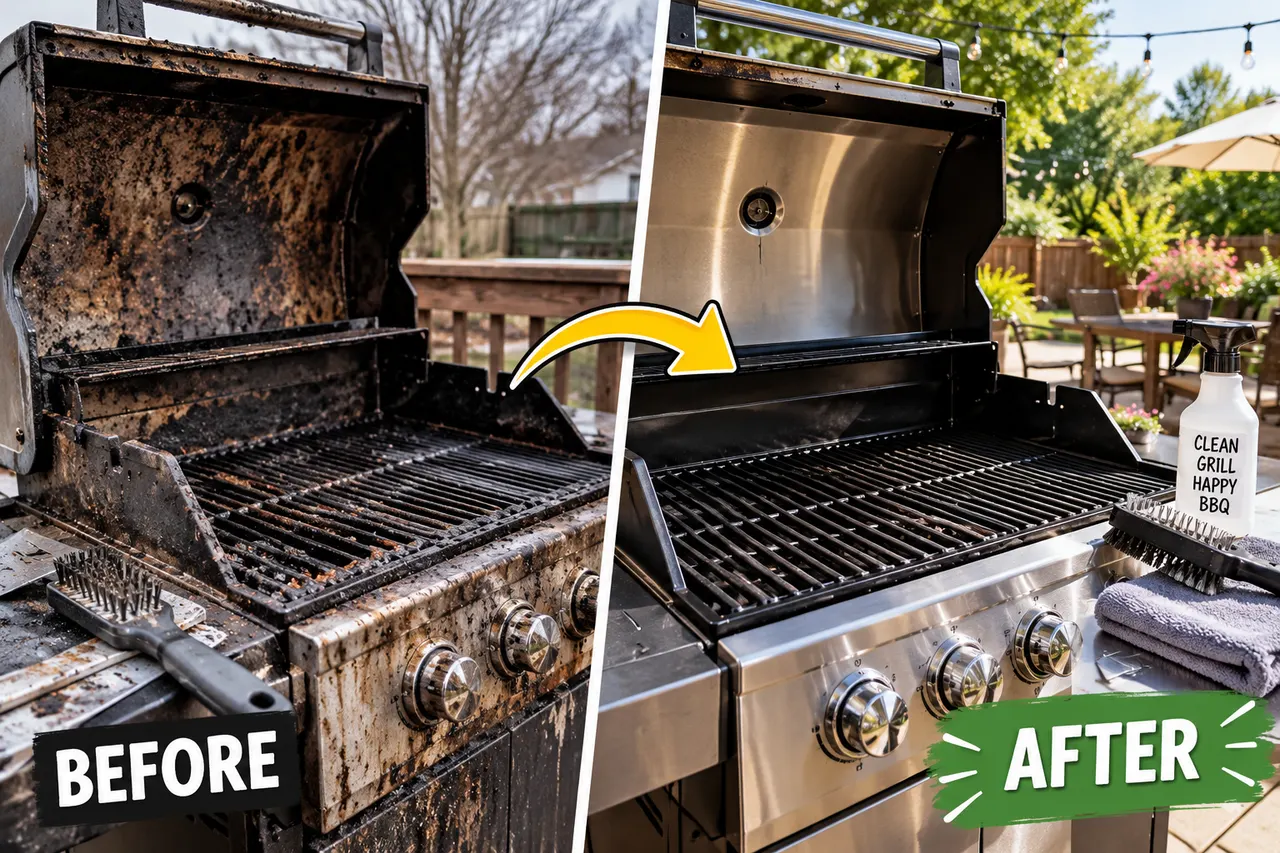
Quick answer
To clean a grill, preheat it on high for 5-10 minutes, scrape the warm grates with a grill brush, then wipe them and check the grease tray. Every 4-6 weeks, soak and scrub the grates, brush the burners and heat plates, and empty and wash the grease trap. Do a full teardown clean before and after the season.
To clean a grill properly, brush the grates while they're still warm after every cook, and give the grates, burners and grease trap a deeper clean every 4-6 weeks during grilling season. Twice a year, before the first cookout and before winter storage, do a full teardown clean. That simple schedule is what stops burgers from sticking, keeps chicken from tasting like last week's salmon, and cuts down on surprise grease flare-ups.
Most grill owners fall into one of two camps: a quick wipe and done, or no cleaning at all until the smell gets hard to ignore. Neither habit gets you a grill that cooks evenly or lasts as long as it should.
This guide covers both halves of the job: the fast wipe-down after every cook, and the deeper seasonal cleaning of the grates, the burners or charcoal area, the grease trap and the exterior.
Key Takeaways
- Brush the grates while they're still warm, within 10-15 minutes of finishing a cook, for the easiest cleanup.
- Do a deeper clean of the grates, burners and grease trap every 4-6 weeks during grilling season.
- Empty the grease or drip tray before it's more than half full. An overflowing tray is a common cause of grill fires.
- Check gas burner ports and hoses for blockages and leaks before the first cook of the season.
- Let charcoal ash cool for at least 24 hours before emptying the ash catcher.
- A light coat of cooking oil on clean, dry grates helps prevent rust and keeps food from sticking.
How often should you clean a grill?
Clean the grates after every cook, deep clean every 4-6 weeks during grilling season, and do a full teardown clean twice a year. Grill cleaning isn't one task. It's three tasks on three schedules, and mixing them up is why most people either over-clean or under-clean.
| Cleaning task | How often | What it covers |
|---|---|---|
| Routine clean | After every cook | Brush warm grates, wipe them down, check the grease tray |
| Deep clean | Every 4-6 weeks in season | Soak and scrub grates, brush burners and heat plates, empty and wash the grease trap |
| Pre-season clean | Once, before the first cookout | Leak test, hose and tank check, clear burner tubes, burn-off |
| End-of-season clean | Once, before storage | Full teardown, dry every part, oil cast iron grates, cover |
Skip the routine step and residue bakes onto the grates, so your next steak sticks and picks up a burnt, bitter flavor instead of a clean sear. Skip the seasonal step and grease builds up in places that can eventually catch fire, or rust sets into parts you can't easily replace.
Charcoal grills skip the burner work but add ash cleanup, one of the everyday trade-offs covered in our gas vs charcoal grill comparison.
Keep a grill brush and a small lidded bucket right next to the grill. When cleanup is a 5-foot walk instead of a trip to the garage, you'll actually do it every time instead of only when the grates look bad.
The 10-Minute Routine Clean After Every Cook
The best time to clean grill grates is right after you finish cooking, while they're still hot. Warm residue scrapes off in seconds; the same residue left to cool turns into a hard, black crust that takes real scrubbing to remove.
Close the lid and let a gas grill run on high for 5-10 minutes after you pull the food off. The heat carbonizes leftover grease and food bits into ash you can brush away. On a charcoal grill, push the coals to one side and brush the hot grates directly.
Then wipe the grates with a damp cloth or paper towel held in tongs, scrape any obvious grease out of the drip tray, and wipe the exterior if anything dripped down the front. If you use a wire brush, glance over the grates for loose bristles before the next cook, since a stray bristle can end up stuck to food. Replace any brush that has started shedding.
Pair this routine with the prep habits in our grilling tips for preventing sticking, like oiling hot, clean grates right before the food goes on.
How do you deep clean grill grates?
Soak the grates in warm, soapy water for 15-20 minutes, scrub them with a stiff brush, then rinse, dry completely and oil them. Pull the grates out and set them in a large tub, utility sink or heavy-duty trash bag filled with warm water and a squirt of dish soap.
For stubborn spots, spread on a paste of baking soda and water, let it sit for 10 minutes, then scrub. It works well without damaging the metal. Rinse thoroughly and dry the grates completely, since water left sitting on bare cast iron can start rusting within a day.
Once dry, wipe the grates with a thin coat of a high-smoke-point oil, like canola or vegetable oil, using a paper towel. This reseasons cast iron and helps stainless grates resist rust and sticking.
If your grates are porcelain-coated, skip the metal wire brush. A stiff nylon brush or a grill stone gets the job done without chipping the coating, and once porcelain chips, that spot will rust from underneath.
Cleaning the Burners and Heat Plates
Underneath the grates on a gas grill sits the part most people never clean: the burner tubes and the metal heat plates (also called heat tents or diffusers) that sit above them and catch dripping grease.
With the gas turned off and the tank disconnected, lift out the grates and heat plates and brush off the built-up grease and ash. Then brush the burner tubes and use a thin piece of wire, such as an unbent coat hanger, to clear the small gas ports along each tube. A clogged port causes uneven flames and cold spots. Avoid toothpicks or matches, since a broken piece left inside a port can block gas flow.
While you're in there, look for spider webs or small nests inside the burner tubes. Spiders and insects like the sheltered space during the off-season, and a blocked tube can push gas out where it shouldn't go, creating a flashback risk the next time you light the grill.
On a charcoal grill, this step means emptying and brushing out the ash catcher and charcoal grate once the ash has fully cooled. Wait at least 24 hours after your last cook, since coals can hold heat far longer than they appear to, and dump the ash into a metal container.
How often should you empty the grease trap?
Check the grease trap every couple of cooks and empty it once it's about half full. Every grill with a lid has some version of a grease trap or drip pan under the cooking area, usually a small metal or foil tray that catches what runs off the grates.
A tray that's allowed to fill all the way is one of the more common causes of backyard grill fires, since overflowing grease can drip onto a hot burner or the ground below. Old grease also smokes and leaves a stale taste on food, one of the common grilling mistakes that ruin good food.
Let the grease cool completely, then scrape it into the trash, never down a drain, where it hardens and clogs the pipe. Wash the tray with warm, soapy water. Lining it with aluminum foil before your next cook makes the next cleanup as simple as lifting the foil out.
Cleaning the Exterior Without Damaging the Finish
The outside of the grill gets grease splatter and fingerprints, and it gets cleaned the wrong way more often than any other part.
On stainless steel lids and side panels, wipe in the direction of the grain with warm water and a few drops of mild dish soap on a soft cloth, then dry with a microfiber towel to avoid water spots. Skip abrasive scouring pads and anything with bleach, since both can dull or discolor stainless steel permanently.
Painted or powder-coated exteriors only need warm, soapy water. Avoid oven cleaners and harsh degreasers on painted surfaces, which can strip the finish and invite rust.
Don't forget the control knobs, igniter button and the shelf underneath, where grease and dust collect unnoticed. An old toothbrush cleans around knobs without letting water drip into the valve assembly.
Pre-Season Cleaning: Getting Your Grill Ready for Spring
Before the first cookout of the season, your grill needs more than a wipe-down, especially if it sat outside all winter.
Check gas hoses and connections for cracks or brittleness, then do a simple leak test: brush soapy water onto the connections and open the gas without lighting the grill. Bubbles at a connection mean a leak, and that fitting needs to be tightened or replaced before you use the grill.
Check the date stamped on the propane tank's collar. Standard tanks need requalification 12 years after manufacture, and many refill and exchange services won't fill an out-of-date tank. Clear any insect nests from the burner tubes, wipe the inside of the lid where moisture collects, and lubricate stiff hinges.
Finish by running the grill on high with the lid closed for 10-15 minutes. This burns off dust and residue and gives you a chance to spot uneven flames before you're standing there with a plate of raw chicken.
End-of-Season Deep Clean and Winter Storage
The cleaning you do before putting the grill away matters as much as the cleaning before you use it, because whatever grease and moisture you leave behind will sit there for months.
Do a full teardown clean: grates soaked and scrubbed, heat plates and burners brushed out, grease tray emptied and washed, and the interior wiped down. Make sure every part is completely dry before reassembling, since trapped moisture over winter is one of the fastest routes to a rusted-out grill.
Give cast iron grates a slightly heavier coat of oil than usual before storage. For gas grills, disconnect the propane tank and store it outdoors, upright, away from the grill and out of direct sun, never inside a garage or house.
Use a breathable grill cover rather than an airtight plastic tarp, which traps condensation and encourages rust. If you have the space, keeping the grill somewhere dry, like a garage or covered patio, beats leaving it exposed to snow and freeze-thaw cycles.
A Clean Grill Cooks Better and Lasts Longer
Knowing how to clean a grill comes down to consistency, not intensity. A 10-minute wipe-down after every cook prevents most of the buildup that turns into a bigger job later, and a thorough seasonal clean twice a year handles everything the routine can't reach.
Grills that get this kind of regular attention heat more evenly, cook food that tastes like what you actually put on the grates, and last longer than grills that only get cleaned when something smells off.
Frequently Asked Questions
Is it better to clean a grill hot or cold?
Clean the grates while the grill is still hot or warm, since heat loosens residue and lets it scrape off in seconds. Deep cleaning of burners, heat plates and the grease trap should be done with the grill completely cool and the gas disconnected.
What's the best way to clean rusty grill grates?
Scrub loose rust off with a stiff wire brush (or a nylon brush for porcelain-coated grates), wash with warm soapy water and dry immediately. Then coat the grates with a thin layer of cooking oil to help keep the rust from coming back.
Is it safe to use a wire brush on a grill?
Yes, on bare cast iron or stainless steel grates, as long as the brush is in good shape. Replace it once bristles start to loosen, and check the grates for stray bristles before cooking. Avoid wire brushes on porcelain-coated grates, which they can chip.
How do I get rid of a burnt grease smell from my grill?
A lingering burnt-grease smell usually means the grease tray or drip pan needs emptying and washing, not just the grates. Also check the heat plates and the inside of the lid, since built-up grease in any of those spots will smoke the next time you fire up the grill.
Do I need to clean my grill before winter storage?
Yes. Grease and moisture left on the metal for months are a main cause of rust and corrosion over winter. Do a full clean, let every part dry completely, oil cast iron grates, and use a breathable cover.
Published · Last updated . Written by the Backyard with Ben team from standard, widely published guidance. About us.
More for your backyard
Gear up with our top-rated tool picks, shop the look if you'd rather buy than build, or read a related guide. See all BBQ & Grilling guides.
Related guides
 AI-generatedBBQ & Grilling
9 Grilling Mistakes That Ruin Good Food and How to Fix Them
Most disappointing grilled food comes from a few fixable habits: crowding the grate, lifting the lid, skipping the preheat and brushing on sugary sauce too early.
 AI-generatedBBQ & Grilling
Gas vs. Charcoal Grill: Which Is Better for You?
Charcoal gives smokier flavor and a hotter sear; gas preheats in about 10-15 minutes and cleans up faster. The better grill is the one that fits how often and how you cook.
 AI-generatedBBQ & Grilling
12 Grilling Tips to Improve Your Backyard BBQ
Better grilling comes from a few habits: set up two heat zones, cook by thermometer instead of time, oil hot, clean grates and rest meat before you cut it.