
9 Grilling Mistakes That Ruin Good Food and How to Fix Them
Most disappointing grilled food comes from a few fixable habits: crowding the grate, lifting the lid, skipping the preheat and brushing on sugary sauce too early.
 By the Backyard with Ben teamUpdated · 8 min read
Quick answer
The most common grilling mistakes are overcrowding the grate, lifting the lid too often, not preheating long enough, brushing on sugary sauce too early, ignoring carryover cooking and letting grease build up. Fix them by spacing food out, keeping the lid down, preheating 10-15 minutes, saucing only in the last 5-10 minutes and cooking by thermometer.
The grilling mistakes that ruin good food are usually habits, not bad ingredients: crowding the grate, opening the lid constantly, putting food on a grill that isn't fully preheated, and saucing too early. Each one has a simple fix. If your chicken comes out dry, your vegetables mushy or your sauce burnt and bitter, one of the nine mistakes below is almost always the cause.
Think of this as a troubleshooting guide: find the problem you keep running into, then apply the fix. If you'd rather start with the fundamentals, our grilling tips for better backyard BBQ cover heat zones, thermometers and resting from the ground up.
Key Takeaways
- Give food room on the grate instead of crowding it all on at once.
- Keep the lid down as much as possible instead of checking constantly.
- Preheat fully before anything touches the grate.
- Apply sugary BBQ sauce only in the last few minutes of cooking.
- Match your wood or charcoal choice to what you're actually cooking.
- Use separate tools and plates for raw and cooked meat.
Overcrowding the Grill
Packing the grate full feels efficient, but it drops the surface temperature fast and traps steam around the food instead of letting it sear.
The result is grayish, boiled-looking meat instead of a browned crust, even if the grill was plenty hot before you loaded it.
Leave at least an inch of space around each piece so heat and air can move freely. Cooking for a crowd? Grill in batches and use the indirect side to hold finished food warm while the next batch sears.
If you can't fit everything with proper spacing, cook the items that benefit most from a hard sear first, then move them to indirect heat to hold while the rest finishes.
Lifting the Lid Constantly
Every time the lid comes up, heat escapes and cooking time gets longer and less predictable.
With the lid down, a grill works like an oven, circulating steady heat around the food. Opening it repeatedly resets that environment each time.
Open the lid when it's time to flip, move or take a temperature, not just to look. For longer indirect cooks, open it even less. Trust your timer and thermometer over your eyes.
How long should you preheat a grill?
Preheat a gas grill for at least 10-15 minutes with the lid closed, and give charcoal 15-20 minutes for the coals to ash over. Putting food on a half-warmed grill is one of the fastest ways to get sticking, uneven cooking and no real color.
The goal is hot grates, not just hot air. Flames that look hot are not the same as grates that sear on contact, and a short preheat also leaves old residue stuck to the grates where it can transfer to your food.
When should you put BBQ sauce on grilled food?
Brush sugary BBQ sauce on only in the last 5-10 minutes of cooking. Classic sauces are high in sugar, and sugar burns well before meat finishes cooking, so saucing early gives you a bitter, blackened crust instead of a glossy glaze.
Brush on a thin layer, let it set for a minute or two, then add another coat if you want more.
For flavor throughout the cook, use a dry rub or a vinegar-and-spice mop sauce early on and save the sweet glaze for the very end.
Using the Wrong Wood or Charcoal for the Food
Not every smoke flavor suits every food. Strong woods like mesquite or hickory can overpower delicate proteins like fish or chicken breast, while mild woods can get lost against beef or pork shoulder.
As a general guide, save heavier smoke woods (hickory, mesquite, oak) for beef and pork, and reach for milder ones (apple, cherry, pecan) with poultry, fish and vegetables.
Charcoal type matters too. Lump charcoal burns hotter and faster, which suits quick searing, while briquettes burn steadier and longer, which suits longer cooks. Either way, let the coals ash over before cooking so you don't pick up harsh smoke or lighter-fluid flavor.
Ignoring Carryover Cooking
Food keeps cooking after it leaves the heat, and thicker cuts carry over more than thin ones. Treating every protein the same way leads to overcooked results.
A thick steak or roast can climb 5-10°F after coming off the grill, while a thin chicken breast or burger patty carries over only a couple of degrees because there's less mass holding heat.
Pull thicker cuts a little earlier relative to your target and rest them before cutting. Carryover is about hitting doneness, not a shortcut on safety: poultry should still reach 165°F and burgers 160°F, the USDA safe minimums, so check the final reading. For steak-specific pull temperatures, see our guide to how to grill the perfect steak.
Letting Grease and Drippings Build Up
A full grease trap or crusted drip pan is more than a fire hazard. Old grease flares unpredictably and gives a stale, acrid flavor to whatever you're cooking above it.
Empty and wipe the grease tray every few cookouts, and scrape residue from drip pans and heat plates instead of letting it build up season after season. Our guide on how to clean a grill covers a simple schedule.
If food has started tasting bitter or smoky in a bad way, check the grease tray before you blame the ingredients.
Seasoning at the Wrong Time for the Cut
When you season matters almost as much as what you use. Salt pulls moisture to the surface, and for roughly the first half hour that moisture just sits there, so a thick steak salted 10-30 minutes before grilling tends to steam instead of sear.
For thicker cuts, salt at least 40 minutes ahead so the moisture has time to be reabsorbed, or salt right before the meat hits the grill. For thin or delicate foods like fish, shrimp or thin-cut chicken, season close to cook time.
Marinades follow similar logic: acidic marinades can turn delicate proteins mushy if left on too long, so match marinating time to what you're cooking, and marinate in the refrigerator, not on the counter.
Mixing Up Raw and Cooked Food Handling
Using the same plate or tongs for raw meat and then finished food is one of the most common mistakes at backyard cookouts, and it can ruin a meal in a worse way than overcooking.
Keep a dedicated plate and tongs for raw food and clean ones for anything that's done. Don't reuse marinade that touched raw meat as a sauce unless you bring it to a boil first.
Leftovers count too. USDA guidance is to keep perishable food out no longer than 2 hours, or 1 hour when it's above 90°F outside, so get cooked food back in the fridge once everyone has eaten.
Small Fixes, Consistently Better Food
None of these grilling mistakes need better equipment or pricier ingredients to fix. Use this chart to match what you're seeing to the likely cause:
| Problem | Likely mistake | Fix |
|---|---|---|
| Gray, steamed-looking meat | Overcrowded grate or wet surface | Space food an inch apart; pat meat dry |
| Food sticks to the grate | Grill not preheated; dirty grates | Preheat 10-15 minutes, scrape and oil grates |
| Burnt, bitter glaze | Sugary sauce added too early | Sauce only in the last 5-10 minutes |
| Dry chicken or overcooked steak | Cooking by time, ignoring carryover | Use a thermometer; pull thick cuts early and rest |
| Stale or acrid flavor | Old grease in tray or drip pan | Empty and clean the grease tray regularly |
| Burnt outside, raw inside | All cooking over direct high heat | Sear direct, finish on the indirect side |
Fix one habit at a time, starting with whichever mistake sounds most familiar, and the difference should show up at your next cookout.
Frequently Asked Questions
Why does my grilled food always come out dry?
Cooking by time instead of temperature, skipping a full preheat and ignoring carryover cooking are the usual causes. Use a thermometer, pull thicker cuts slightly before your target doneness while still reaching safe minimums, and rest meat before cutting.
Why is my grilled chicken burnt outside but raw inside?
The heat is too high for the thickness, usually because everything is cooking over direct flame. Brown the chicken over direct heat, then move it to the indirect side with the lid closed until the thickest part reaches 165°F.
Why does my grilled food taste bitter?
The most common causes are sugary sauce that burned, old grease smoking in the drip tray, residue on dirty grates, and coals that weren't fully ashed over or were started with too much lighter fluid.
What wood pairs best with chicken and fish on the grill?
Milder woods like apple, cherry or pecan generally pair better with chicken and fish than strong woods like mesquite or hickory, which can easily overpower more delicate proteins.
Is it safe to use the same tongs for raw and cooked meat?
No. Using the same tongs or plate for raw and cooked meat risks cross-contamination and foodborne illness. Keep separate tools and plates for raw food and for anything that's finished cooking.
Published · Last updated . Written by the Backyard with Ben team from standard, widely published guidance. About us.
More for your backyard
Gear up with our top-rated tool picks, shop the look if you'd rather buy than build, or read a related guide. See all BBQ & Grilling guides.
Related guides
 AI-generatedBBQ & Grilling
12 Grilling Tips to Improve Your Backyard BBQ
Better grilling comes from a few habits: set up two heat zones, cook by thermometer instead of time, oil hot, clean grates and rest meat before you cut it.
 AI-generatedBBQ & Grilling
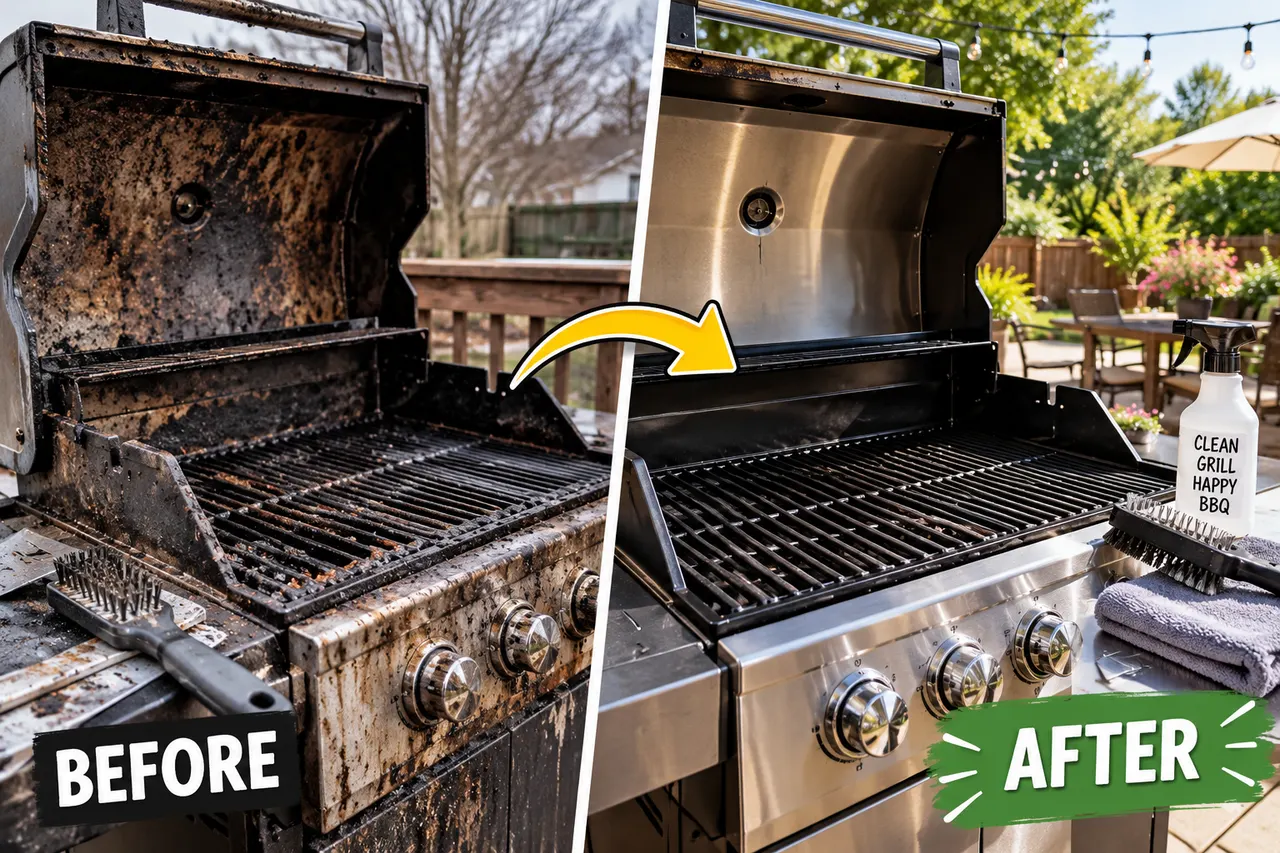
How to Clean a Grill: Quick Routine and Deep Clean
Brush the grates while they're still warm after every cook, then deep clean the grates, burners and grease trap every 4-6 weeks during grilling season.
 AI-generatedBBQ & Grilling
How to Grill the Perfect Steak: Temperature and Timing
Sear over high heat, finish thicker steaks on a cooler zone, and pull the steak about 5°F below your target, since it keeps rising as it rests. Medium-rare finishes at 130-135°F.