Skip to content
Free printable

Lawn care calendar

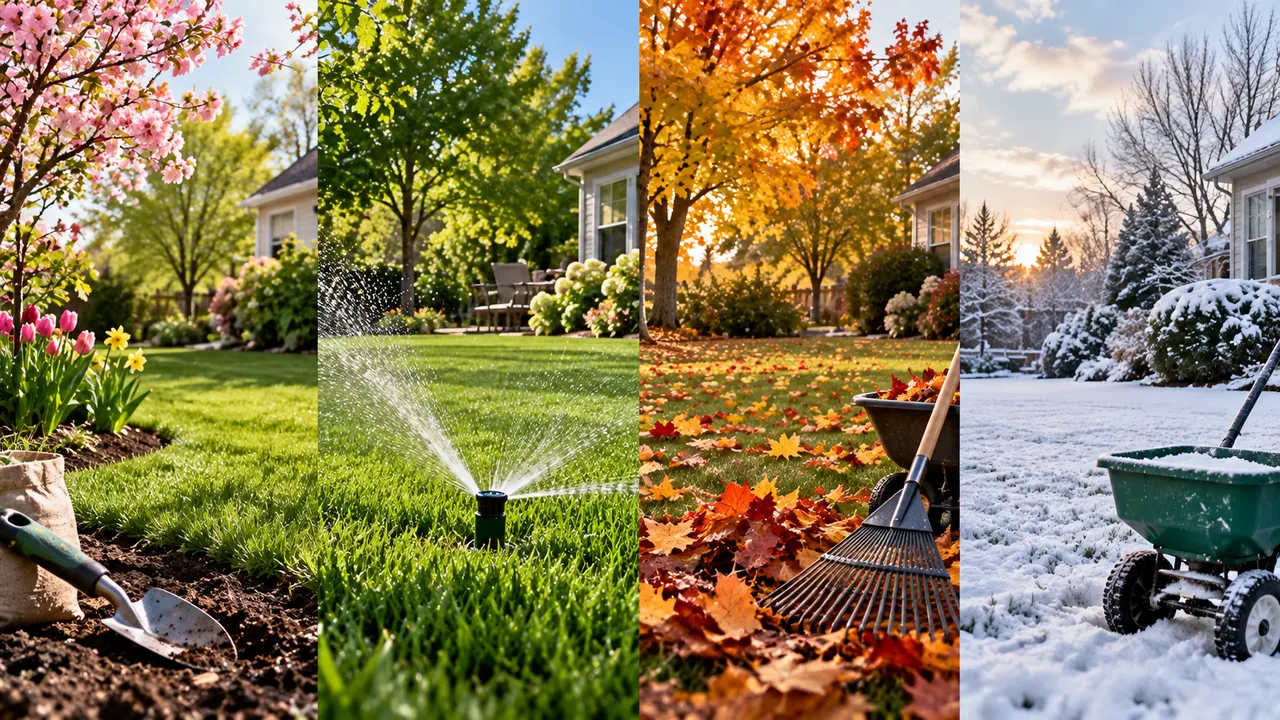
What to do for your lawn each season, for cool-season grasses (northern lawns) and warm-season grasses (southern lawns). Exact timing depends on your local climate, so check your frost dates or local extension service.

SeasonCool-season grass (fescue, bluegrass, ryegrass)Warm-season grass (Bermuda, zoysia, St. Augustine, centipede)
Early springRake out debris. Apply pre-emergent crabgrass control when soil temperatures reach about 55°F. Service the mower and sharpen the blade.Rake out debris. Apply pre-emergent when soil reaches about 55°F. Wait for the lawn to green up before fertilizing.
Late springLight feeding if needed. Start mowing at the high end of the recommended height. Spot-treat broadleaf weeds.Fertilize once the lawn is fully green and actively growing. Best time to seed, sod or plug bare spots.
SummerMow high and water deeply but less often (about 1 inch a week including rain). Avoid heavy fertilizing in heat. Watch for grubs.Peak growth: mow often, fertilize per label, water deeply in dry spells. Good time to dethatch or core aerate.
Early fallBest time to core aerate, overseed and fertilize. Keep new seed moist until it is established.Last feeding about 6–8 weeks before the first expected frost. Stop aerating and dethatching.
Late fallFinal fertilizer application before the ground freezes (common for northern lawns). Keep mowing until growth stops. Remove fallen leaves.Lawn goes dormant and turns tan. Keep leaves off the grass. Apply pre-emergent for winter weeds if they are a problem.
WinterStay off frozen or frosty grass. Clean and store tools.Water dormant grass lightly during long dry spells. Plan spring repairs.

Related guides

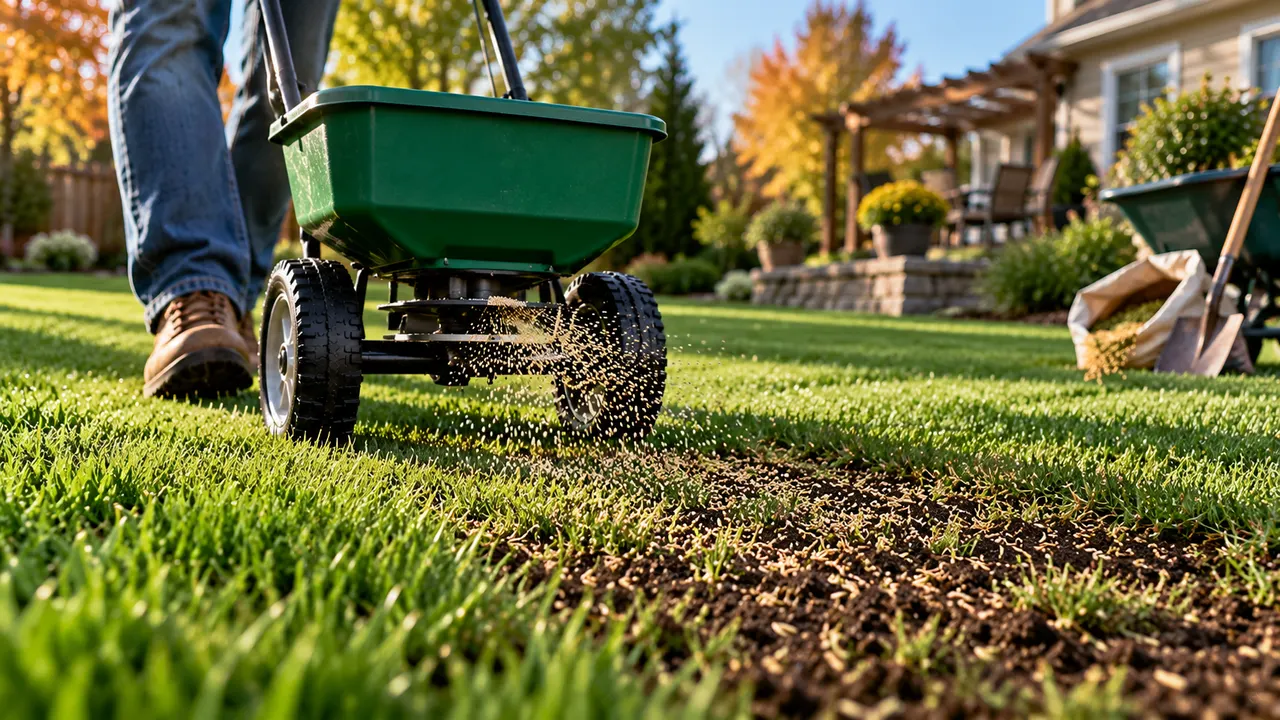
AI-generated image of broadcast spreader applying grass seed over a thin, patchy lawn during overseedingAI-generatedLawn Care

How to Overseed a Lawn for Thicker, Greener Grass

To overseed a lawn, mow short, rake out thatch, spread seed at the bag's overseeding rate, rake it in and keep the soil moist until it sprouts. Cool-season lawns do best from mid-August to early October.

AI-generated image of mowing a healthy green backyard lawnAI-generatedLawn Care

7 Lawn Care Mistakes That Are Ruining Your Grass

Most thin, patchy lawns are the result of everyday habits: mowing too short, watering a little every day, dull blades, bagging every clipping and fertilizing blind. Here are seven to stop and what to do instead.

Every week or so

Tool picks & backyard tips

Top-rated tool picks, smart buying tips and practical backyard guides. Straight to your inbox. No spam.

No spam. Unsubscribe anytime.