
DIY Backyard Privacy Screen Ideas: 7 Screens You Can Build
The easiest DIY backyard privacy screens are lattice or horizontal slat panels framed between 4x4 posts, about 6 feet tall. Bamboo rolls, living trellises and planter screens give you faster, greener or movable options.
 By the Backyard with Ben teamUpdated · 11 min read
Quick answer
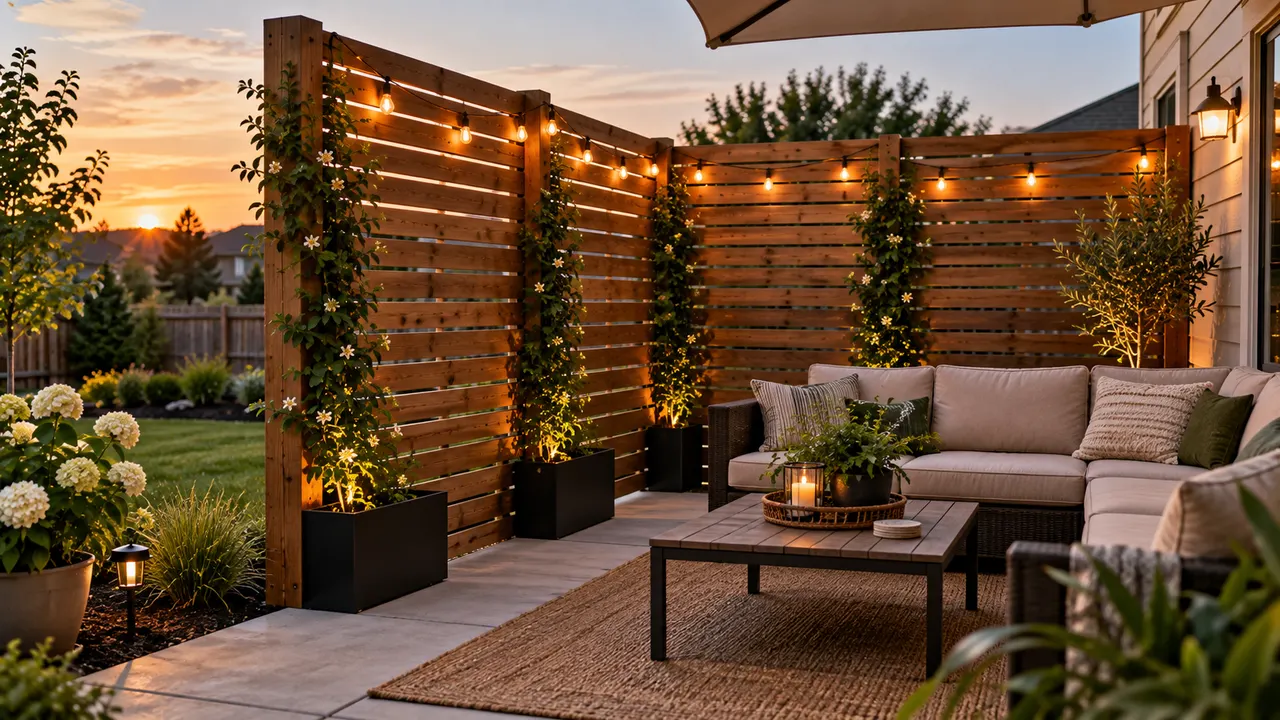
The most practical DIY backyard privacy screen is a framed panel of lattice or horizontal slats between 4x4 posts set in concrete, usually about 6 feet tall. If you can't dig, roll bamboo over an existing fence or build a planter-based screen. For long-term coverage, add a vine trellis or shrubs behind it.
You can build a DIY backyard privacy screen in a weekend by framing lattice or horizontal slat panels between 4x4 posts, or in an afternoon by attaching bamboo rolls to a fence you already have. Around 6 feet tall is the sweet spot for most patios: high enough to block a standing sightline, and a common height limit for backyard fences in many towns. If your patio faces a neighbor's window, a busy sidewalk or a two-story house next door, one of the screens below can turn it back into a place to relax.
This guide walks through seven buildable ideas, from classic lattice panels to living trellises covered in vines. Each one uses widely available lumber, hardware and plants, with real dimensions so you can plan materials before you start cutting.
The focus here is on screens you build. If you'd rather solve the problem with plants, furniture placement or other no-build fixes, see our guide to getting backyard privacy without a fence.
Key Takeaways
- Most DIY privacy screens work best between 5 and 8 feet tall. Around 6 feet blocks a standing sightline, and taller screens are more likely to need a permit.
- Lattice panels are the fastest framed option to build, but only offer partial privacy since you can still see through the gaps.
- Horizontal slat screens built board-on-board give the most solid, modern-looking privacy using the same basic post-and-frame structure.
- Bamboo and reed rolls are the quickest fix for an existing chain-link or wire fence, usually attached in an afternoon with zip ties.
- Living screens made from vines or fast shrubs take a season or more to fill in but keep improving every year, unlike wood.
- Check with your local building department before building anything over 6 feet or attaching a screen to a shared fence line, and call 811 before you dig post holes.
How Do You Build a Lattice Privacy Screen?
Set 4x4 posts in concrete 6 to 8 feet apart, frame between them with 2x4 rails, and fasten a lattice panel into each frame. It's the easiest framed screen to start with, and the same framing skills carry over to most other options on this list.
Use pressure-treated 4x4 posts in concrete footings about 24 to 30 inches deep, or below your local frost line if that's deeper. Frame between each pair of posts with 2x4 top and bottom rails, then drop a 4-foot by 8-foot cedar or vinyl lattice panel into the frame and secure it with galvanized screws or a router-cut groove.
A 6-foot-tall screen is the most common height for blocking a standing sightline from a neighbor's yard. Many towns cap backyard fences at around that height without a permit, but rules vary, so confirm yours before you buy lumber. Call 811 a few days before digging so buried utility lines get marked.
Keep in mind that lattice only offers partial privacy, since you can still make out shapes and movement through the diamond gaps. It works best layered with plantings, or as a lower accent screen rather than the only barrier around a hot tub or outdoor shower.
Stain or paint lattice panels before you install them, not after. It's far easier to get an even coat on a panel laid flat on sawhorses than on one already screwed between two posts.
Add Solid Coverage with a Horizontal Slat Screen
If lattice feels too open, a horizontal slat screen uses the same post-and-frame structure but swaps the crisscross pattern for stacked boards, usually 1x4 or 1x6 cedar or pressure-treated lumber.
For true privacy, build it board-on-board style: overlap each row by about half an inch on alternating sides of the frame so there's no straight sightline through, while air can still move between the boards. If you don't mind a little visibility, space 1x6 boards with a quarter- to half-inch gap instead. It uses less material and still blocks most direct views.
Plan on 4x4 posts every 6 to 8 feet, set 24 to 30 inches deep. A 6-foot-tall screen with gapped 1x6 boards needs roughly 12 to 13 boards per 8-foot section; 1x4 boards or a board-on-board layout need more.
This style reads as more modern and finished than lattice, and it holds up well as a stand-alone patio privacy screen without needing plants to fill in gaps.
Cover an Existing Fence with Bamboo or Reed Rolls
If you already have a chain-link or basic wire fence and just need to block the view through it, rolled bamboo or reed fencing is the fastest fix on this list.
Rolls typically come 6 to 8 feet tall and 15 to 16 feet long. Unroll a section along your fence line and attach it with zip ties or 18-gauge wire at the top, middle and bottom rail, spacing ties every 12 to 18 inches so the panel doesn't sag or flap in the wind.
This is an afternoon project rather than a weekend one: no digging, no concrete, no cutting lumber. The tradeoff is lifespan. Expect roughly 3 to 5 years outdoors before reed starts fading and getting brittle, and plan to replace sections as needed rather than the whole run at once.
It's a good temporary or rental-friendly solution while you decide whether you want something more permanent.
Grow a Living Privacy Screen with a Trellis
A planted trellis screen takes longer to deliver full privacy than a built panel, but it keeps improving every year instead of aging and needing replacement.
Build a simple trellis by attaching 2x2 strips in a diamond or square grid to a 2x4 frame between posts, then plant a climbing vine at the base. Clematis, climbing hydrangea and star jasmine (where winters allow it) are reliable perennial choices, while morning glory or scarlet runner beans can cover a trellis in a single season while a perennial vine gets established.
For a fully green screen without a built structure, shrubs like arborvitae or privet, or clumping (not running) bamboo, planted about 3 feet apart along the property line typically fill in over 2 to 3 growing seasons. Our roundup of fast-growing privacy trees for backyards covers taller options and spacing.
Living screens do best when you're not in a rush for total privacy on day one. If you need coverage immediately, pair a young planting with a temporary screen and remove the temporary piece once the plants fill in.
Hang Outdoor Curtains for Flexible Privacy
Outdoor curtains give you privacy you can open and close, which makes them a good fit for a patio you use differently depending on the day.
If you already have a pergola, covered patio beam or attached overhang, run a cable or curtain rod between two support points and hang grommet-top outdoor fabric panels, typically 84 to 108 inches long, using rust-resistant hardware rated for exterior use.
No overhead structure yet? Build a simple frame from two 4x4 posts set in concrete with a horizontal 2x4 or cable strung between them at 7 to 8 feet high, then hang the same style of curtain panels from that.
Tie the curtains back when you want the view open, and close them for a quieter, more private evening. That flexibility is the main advantage over a fixed screen.
Build a Movable Screen for Decks and Rentals
If you're renting, on a deck, or just don't want to dig post holes, a planter-based screen gives you a freestanding privacy panel that isn't attached to anything.
Build or buy a sturdy planter box roughly 24 by 24 inches and at least 18 inches deep, then set two 4x4 posts into the corners and pour concrete mix into the planter around the base of each post. Once the concrete cures, attach a lattice or slat panel between the posts, about 5 to 6 feet tall, and fill the rest of the planter with soil and a trailing plant to soften the base.
Because the screen is weighted by the planter rather than buried footings, you can reposition it seasonally or take it with you when you move. Build it with two people in mind, since a filled planter with an attached screen gets heavy fast. In windy spots, keep the panel shorter or use a wider, heavier planter so it can't tip, and check your deck's load capacity before parking several on it.
How Do You Block a View From a Second-Story Window?
A fence-height screen alone usually can't, so layer a 6-foot built screen with taller plants, or add overhead cover like a pergola with curtains near your seating. People look into your yard from different heights and distances, and no single screen blocks every sightline.
The most effective setups combine at least two ideas from this list: a built screen like a slat panel or bamboo roll for immediate eye-level coverage, backed by a taller planting like ornamental grasses, arborvitae or a climbing vine that eventually rises above the fixed screen's height.
This layered approach also ages better than one very tall screen. As the planting fills in over a few seasons, it softens the hard edge of the built structure and starts blocking upper-story sightlines that a 6-foot screen never could.
Choosing the Right DIY Privacy Screen for Your Yard
There's no single best DIY backyard privacy screen. The right pick depends on how much time you want to spend building, how long you want it to last, and whether you need privacy today or can wait a season for plants to fill in.
| Screen type | Privacy level | Post holes? | Build time | Best for |
|---|---|---|---|---|
| Lattice panel | Partial | Yes | A weekend | Accent screens, layering with plants |
| Horizontal slats | Near-solid (board-on-board) | Yes | A weekend | Modern stand-alone patio screen |
| Bamboo or reed roll | Solid view block | No | An afternoon | Covering chain-link; renters |
| Living trellis or shrubs | Grows to full | Posts or planting holes | A weekend, plus 1 to 3 seasons to fill in | Long-term screening that improves over time |
| Outdoor curtains | Adjustable | Only if no overhead structure | An afternoon to a weekend | Pergolas and covered patios |
| Planter screen | Partial to solid | No | A weekend | Decks, rentals, movable privacy |
If you want the fastest project, bamboo rolls or a simple lattice panel will get you there in a weekend. If you want something that improves with time, a planted trellis or layered planting is worth the wait. Most backyards end up happiest with a mix: a built screen for now, and something green filling in behind it for later. A drill, a post-hole digger and a level from our power tool picks cover most of these builds, and if you're looking for more small projects, browse these easy DIY backyard upgrades.
Frequently Asked Questions
What is the cheapest way to make a DIY backyard privacy screen?
Rolled bamboo or reed fencing attached to an existing chain-link or wire fence is usually the least expensive option, since you're not buying posts, concrete or framing lumber, just the roll itself and zip ties or wire to attach it.
How tall should a DIY privacy screen be for a patio?
About 6 feet is the most common height for blocking a standing sightline from ground level. If you need to block a view from a second-story window, combine a 6-foot screen with taller plantings or overhead cover rather than building one very tall panel.
Do I need a permit for a backyard privacy screen?
It depends on your city and the height of the structure. Many areas allow backyard fences and screens up to about 6 feet without a permit, but rules can be stricter for front yards, corner lots, shared property lines and HOAs. Check with your local building department before you build.
Can I build a privacy screen without digging post holes?
Yes. Mount a lattice or slat panel on posts anchored in a large, heavy planter box, or attach bamboo rolls to a fence you already have. Both are common approaches for renters, decks and patios where digging isn't an option.
How do I keep a wood privacy screen from warping or rotting?
Use pressure-treated lumber or a naturally rot-resistant wood like cedar, seal or stain it before installation, and leave small gaps between boards so air can circulate and moisture doesn't stay trapped against the wood.
Published · Last updated . Written by the Backyard with Ben team from standard, widely published guidance. About us.
As an Amazon Associate we earn from qualifying purchases. Disclosure
Tools for this guide
DEWALT 20V MAX Cordless Circular Saw (DCS391B, tool only)
Why we pick it: 4.6★ from 11,000+ reviews. Uses the same 20V MAX batteries as the DEWALT drill kits. Straight cuts for raised beds, fences and decking.
Check price on AmazonCheck priceDEWALT 20V MAX Drill + Impact Driver Combo Kit (DCK240C2)
Why we pick it: 4.7★ from 61,000+ reviews. Drill and impact driver in one kit with 2 batteries, charger and bag. It covers almost every backyard build.
Check price on AmazonCheck priceSwanson 7" Speed Square with Blue Book (S0101)
Why we pick it: 4.8★ from 17,000+ reviews. Square cuts, angles and layout in one inexpensive aluminum tool.
Check price on AmazonCheck priceMinwax Wood Finish Stain, Dark Walnut, 1 Quart
Why we pick it: 4.6★ from 11,000+ reviews. A classic oil-based stain. Other colors are available on the same listing.
Check price on AmazonCheck priceMore for your backyard
Gear up with our top-rated tool picks, shop the look if you'd rather buy than build, or read a related guide. See all DIY Projects guides.
Related guides
 AI-generatedOutdoor Living
How to Get Backyard Privacy Without a Fence
Plant a living screen, grow vines on a trellis, line the patio with tall planters or hang outdoor curtains. Most options block sightlines without posts, permits or a construction project.
 AI-generatedPlants & Trees
Best Privacy Trees for Backyards: Fast-Growing Options and Spacing
Thuja Green Giant and Leyland cypress are the fastest reliable privacy trees, Emerald Green arborvitae suits narrow yards, and Nellie Stevens holly or Skip laurel handle partial shade.
 AI-generatedDIY Projects
10 Easy DIY Backyard Upgrades You Can Finish in a Weekend
The easiest DIY backyard upgrades are quick, beginner-friendly jobs like hanging string lights, painting old planters, edging the lawn and refreshing mulch. Each takes a few hours with basic tools, so you can finish two or three in one weekend.