
Best Privacy Trees for Backyards: Fast-Growing Options and Spacing
Thuja Green Giant and Leyland cypress are the fastest reliable privacy trees, Emerald Green arborvitae suits narrow yards, and Nellie Stevens holly or Skip laurel handle partial shade.
 By the Backyard with Ben teamUpdated · 10 min read
Quick answer
The best privacy trees for most backyards are Thuja Green Giant and Leyland cypress for fast, tall screens, Emerald Green arborvitae for narrow spaces, and Nellie Stevens holly or Skip laurel where there's partial shade. Plant them about 60-70% of their mature width apart and choose varieties rated for your USDA hardiness zone.
The best privacy trees for backyard screening are dense evergreens that grow quickly and fit your space: Thuja Green Giant and Leyland cypress for tall, fast screens, Emerald Green arborvitae for tight side yards, and Nellie Stevens holly or Skip laurel for spots with some shade. Spacing them correctly matters as much as the variety you pick.
Trees can block a sightline that a 6-foot fence never could, soften traffic noise and give you a yard that feels private year-round. But not every tree marketed as a "privacy tree" fits every yard, and a few of the fastest growers come with real downsides.
This guide covers how fast each option grows, how far apart to plant it, and which popular choices are worth thinking twice about.
Key Takeaways
- Thuja Green Giant and Leyland cypress are the two fastest reliable privacy trees, growing roughly 3-5 feet per year once established.
- Plant most privacy trees 5-8 feet apart for a solid screen within a few years; closer isn't always better.
- Evergreens like arborvitae, holly and cypress give year-round privacy; deciduous options only cover you in leaf season.
- Hybrid poplar and willow grow the fastest of all but have brittle wood, aggressive roots and a shorter lifespan.
- Narrow varieties like Emerald Green arborvitae are the better choice for tight side yards.
- Check your USDA hardiness zone before buying; a tree rated for zones 6-9 won't survive a harsh zone 4 winter.
What Makes a Good Backyard Privacy Tree?
A good privacy tree fills in quickly, stays green through winter and reaches the right height and width for your space. Growth rate matters, but it isn't everything.
A tree that grows fast but only reaches 8 feet tall won't block a second-story view, and a tree that's evergreen but only 2 feet wide will leave gaps unless you plant a lot of them close together.
Sun exposure matters just as much. Most of the fastest-growing privacy trees, including arborvitae and Leyland cypress, want full sun, at least 6 hours a day, to grow dense and even. In a shady side yard you'll often get thin, patchy growth on the shaded side instead of a solid wall of green.
Finally, think about mature width, not just height. A screen that's too narrow for the space leaves gaps at ground level; one that's too wide can crowd a fence line or property boundary within a decade.
Before you buy a single tree, walk the property line with a tape measure and mark exactly where the sightline you want blocked starts and ends. It's easy to buy more trees than you need by planting along the whole fence instead of just the section a neighbor or street can actually see into.
Here's how the main options compare. Growth rates are typical for established trees in good conditions.
| Tree | Growth per year | Mature size | USDA zones | Hedge spacing |
|---|---|---|---|---|
| Thuja Green Giant | 3-5 ft | 40-60 ft tall, 12-20 ft wide | 5-9 | 5-6 ft |
| Leyland cypress | 3-4 ft when young | 60-70 ft tall unpruned | 6-10 | 8-10 ft |
| Emerald Green arborvitae | 6-9 in | 12-14 ft tall, 3-4 ft wide | 3-7 | About 3 ft |
| Nellie Stevens holly | 2-3 ft | 15-25 ft tall, 8-12 ft wide | 6-9 | 6-8 ft |
| Skip laurel | 1-2 ft | 10-15 ft tall, 8-10 ft wide | 6-9 | About 5 ft |
| Hybrid poplar or willow | 5-8 ft | 40-50 ft within a decade | Varies | Not recommended as a permanent screen |
Thuja Green Giant Arborvitae
If one tree comes up in almost every conversation about privacy screening, it's Thuja Green Giant. It can grow 3-5 feet per year once established and reaches 40-60 feet tall with a spread of 12-20 feet at full maturity.
Green Giant is a hybrid arborvitae that combines fast growth with better disease resistance than many older arborvitae varieties. It holds a rich green color through winter instead of bronzing, and it tolerates a wide range of soil types as long as drainage is decent.
It's hardy in USDA zones 5-9, which covers most of the country outside the coldest northern states and the hottest desert regions. For a solid hedge, space Green Giants 5-6 feet apart; for a more open, individual-tree look, 8-10 feet apart works and just takes longer to close the gaps.
The one thing to plan for: this tree gets big. If your side yard is only 8 feet wide, a mature 15-foot-wide Green Giant hedge will eventually crowd it. It's better suited to a backyard fence line or a wider side yard.
Leyland Cypress
Leyland cypress is often the first tree people think of for fast privacy. It can grow 3-4 feet per year in its early years and top out at 60-70 feet tall if left unpruned.
It's hardy in zones 6-10, making it a popular choice across the South and mid-Atlantic. Its feathery, blue-green foliage looks softer than a stiff arborvitae hedge, and it takes well to shearing if you want to keep it at a more manageable 15-20 feet.
Leyland cypress does have a reputation problem worth knowing about. It has a shallow root system, which makes mature trees prone to toppling in high winds or heavy, wet snow. It's also more susceptible to canker diseases and bagworms than Green Giant, especially in humid climates or when trees are crowded with poor airflow.
If you do plant it, give it more breathing room than other privacy trees, about 8-10 feet of spacing, and avoid low-lying areas where water sits after rain.
Emerald Green Arborvitae
Not every backyard has room for a tree that spreads 15 feet wide. Emerald Green arborvitae stays narrow, typically just 3-4 feet wide at maturity, while still reaching 12-14 feet tall.
Its growth rate is slower than Green Giant or Leyland cypress, averaging 6-9 inches per year, but its tight, columnar shape makes it the better fit for narrow side yards, strips along a property line, or anywhere you need height without width.
Emerald Green is hardy in zones 3-7, which makes it a solid option in colder climates where Leyland cypress won't survive winter. Because it's narrower, plant Emerald Greens closer together for a solid screen, about 3 feet apart.
Nellie Stevens Holly
If you want privacy without a conifer look, Nellie Stevens holly is one of the best broadleaf evergreen options. It grows 2-3 feet per year, reaching 15-25 feet tall and 8-12 feet wide, with dense, glossy dark-green leaves that stay full from the ground up.
It produces bright red berries in fall and winter, which adds seasonal color and tends to attract birds. It's hardy in zones 6-9 and tolerates both full sun and partial shade better than most fast-growing conifers, making it a good choice if part of your privacy line gets afternoon shade from the house or a fence.
Its spiny leaves also make it less appealing to deer than many other privacy shrubs, which matters in suburban or semi-rural areas with deer pressure.
Plant Nellie Stevens hollies 6-8 feet apart for a continuous hedge, and expect 3-4 years before it forms a truly solid screen.
Hybrid Poplar and Willow: Fast Growth With Real Tradeoffs
Hybrid poplar and hybrid willow are sometimes sold as "instant privacy" trees because they grow faster than almost anything else, 5-8 feet per year in good conditions, reaching 40-50 feet within a decade.
That speed comes at a cost. Both have soft, brittle wood that breaks easily in storms, and their roots spread aggressively, often reaching toward septic lines, foundations and underground pipes well beyond the canopy. Some municipalities and HOAs restrict where they can be planted for exactly this reason.
They're also short-lived by tree standards, typically declining after 15-20 years, so the fast screen you plant today may need replacing within a couple of decades.
If your only goal is temporary cover while slower, longer-lived trees mature behind them, hybrid poplar can work as a stopgap. A DIY privacy screen near the patio is another way to get cover right away while trees fill in.
Skip Laurel for Shady Spots
Most fast-growing privacy trees want full sun, which leaves a gap for anyone with a shadier yard. Skip laurel (also sold as Schip laurel, a compact form of cherry laurel) fills that gap well.
It grows 1-2 feet per year and reaches a manageable 10-15 feet tall and 8-10 feet wide, with dense, glossy evergreen leaves that hold up in partial shade better than arborvitae or cypress. It's hardy in zones 6-9 and tolerates a range of soil conditions.
Skip laurel isn't the tree to reach for if you need privacy fast, but in a shaded side yard or under the edge of an existing canopy where sun-loving conifers would thin out, it's often the more reliable long-term choice. Space plants about 5 feet apart and expect a fuller look after 3-4 growing seasons.
How Far Apart Should You Plant Privacy Trees?
Plant privacy trees at roughly 60-70% of their mature width. A tree that spreads 10 feet wide at maturity should go in about 6-7 feet from its neighbor, close enough to close the gap without crowding roots. Spacing too far apart leaves gaps for years; spacing too close forces trees to compete for water and nutrients and can lead to thin, uneven growth.
Staggering two rows in a zigzag pattern, rather than a single straight line, can close gaps faster and create a fuller screen sooner, especially with narrow varieties like Emerald Green arborvitae.
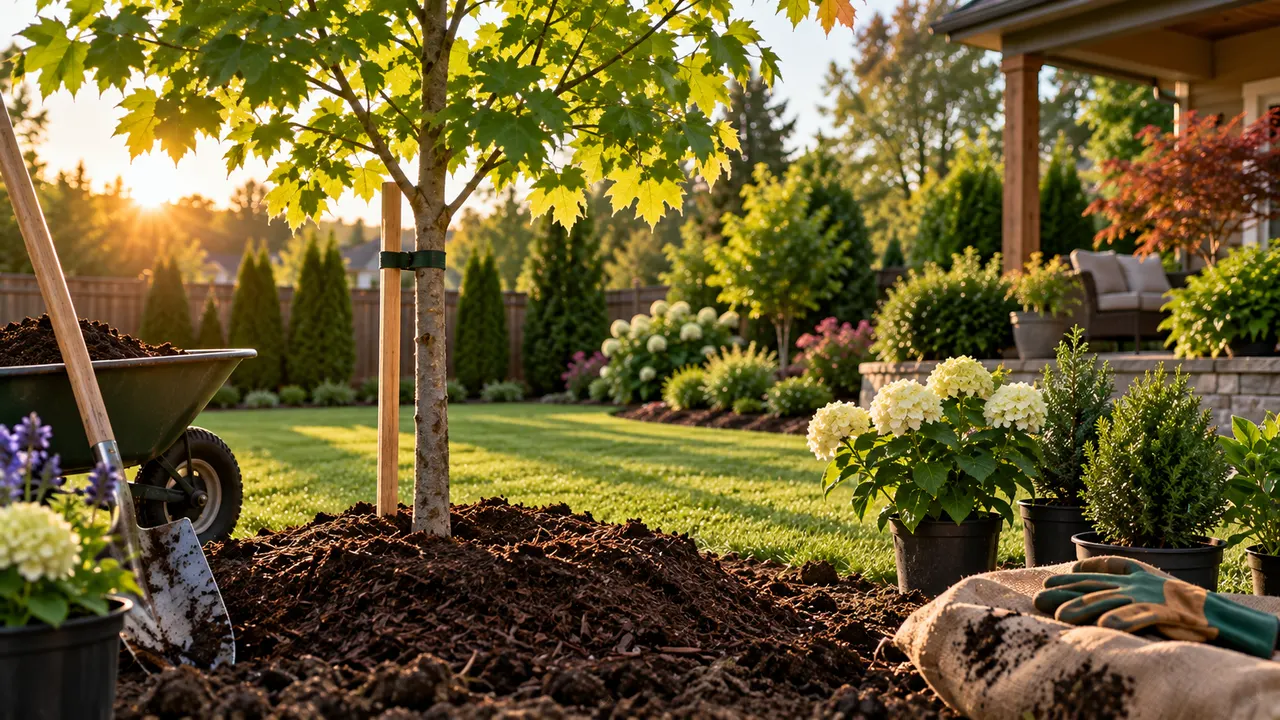
How you plant matters too. Follow the steps for planting a tree the right way, water new privacy trees deeply once or twice a week for the first full growing season, and hold off on heavy pruning until the second year so the tree can put its energy into rooting in.
Pick the Right Tree for Your Space, Not Just the Fastest One
The best privacy trees for backyard screening aren't automatically the fastest-growing ones. Thuja Green Giant and Leyland cypress will get you there quickest, but a narrow side yard, a shady corner or a spot near underground utility lines can make a slower, better-suited tree the smarter long-term choice.
Match the tree to your sun exposure, available width and climate zone first, then let growth rate break the tie. If you'd rather not wait on trees at all, see other ways to get backyard privacy without a fence. And if you want shade or flowers more than screening, browse the best trees for your backyard.
Frequently Asked Questions
What is the fastest-growing privacy tree?
Hybrid poplar and willow grow the fastest, at 5-8 feet per year, but their brittle wood and aggressive roots make them a poor permanent choice. Among reliable long-term options, Thuja Green Giant and Leyland cypress are the fastest, at roughly 3-5 feet per year.
What is the best privacy tree for a small or narrow backyard?
Emerald Green arborvitae is usually the best fit for narrow spaces since it stays about 3-4 feet wide at maturity while still reaching 12-14 feet tall, giving you height without spreading into neighboring space.
What privacy trees grow well in shade?
Skip laurel and Nellie Stevens holly both tolerate partial shade better than sun-loving conifers like arborvitae and cypress, which tend to thin out and grow unevenly without full sun.
How long does it take for privacy trees to fully block a view?
With fast growers like Thuja Green Giant or Leyland cypress planted at proper spacing, expect a mostly solid screen within 2-3 years and full coverage by year four or five. Slower options like Skip laurel or Nellie Stevens holly typically take 3-5 years.
Should I plant Leyland cypress for privacy?
It works well if you have full sun, good drainage and room to give each tree 8-10 feet. It's more prone to storm damage and disease than Thuja Green Giant, so weigh that against its fast growth before committing to a full row.
Published · Last updated . Written by the Backyard with Ben team from standard, widely published guidance. About us.
More for your backyard
Gear up with our top-rated tool picks, shop the look if you'd rather buy than build, or read a related guide. See all Plants & Trees guides.
Related guides
 AI-generatedOutdoor Living
How to Get Backyard Privacy Without a Fence
Plant a living screen, grow vines on a trellis, line the patio with tall planters or hang outdoor curtains. Most options block sightlines without posts, permits or a construction project.
 AI-generatedDIY Projects
DIY Backyard Privacy Screen Ideas: 7 Screens You Can Build
The easiest DIY backyard privacy screens are lattice or horizontal slat panels framed between 4x4 posts, about 6 feet tall. Bamboo rolls, living trellises and planter screens give you faster, greener or movable options.
 AI-generatedPlants & Trees
How to Plant a Tree the Right Way: 7 Mistakes to Avoid
Dig the hole 2-3 times wider than the root ball but no deeper, set the root flare at or slightly above ground level, remove wire, twine and burlap, and water deeply through the first growing season.